Category Archives: Fiction & Essays

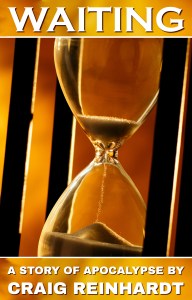
Waiting: A Story of Apocalypse FREE for Kindle from 12/26 through 12/30

Waiting: A Story of Apocalypse by Craig Reinhardt will be FREE for Kindle from Monday, 12/26 through Friday, 12/30.

***

This long short story was originally inspired by the History Channel program Life After People. The premise of the show is not to examine the potential causes of the end of humanity, but rather “what happens to the world we leave behind.”

It’s a fascinating program. It details the fates of our roads, our cities, our buildings, even our family pets and other creatures who depend upon us for a living. It quite often comes to the rather disturbing conclusion that in a pretty short space of planetary time – mere hundreds of years, not thousands – we will be completely forgotten by an Earth that may fare better without us. While in this story I ultimately chose not to focus on the mechanics of the destruction of the trappings of humanity, but rather on what it does to the main character, I think the former offers a world of interesting possibilities for post-apocalyptic literature and I look forward to returning to this subject in the near future.

“Waiting” tells the story of a middle-aged misanthrope who witnesses this degeneration, who lives long enough to see how quickly humanity can fail, how insufficient its infrastructure is in the case of a massive disaster. But what place is there for a person in a world without people?

waiting

Go back

Your message has been sent

Warning
Warning
Warning
Warning
Warning

Warning.

Rudolph the Red-Nosed Reindeer: A Critical Analysis

Last week I decided to find a new home for my fake Christmas tree. Formerly it resided in an awkward and difficult-to-navigate corner of the basement, and I’ve finally relocated it to the upstairs closet with the rest of the Christmas stuff. Logically I know I ought to just get rid of the stupid thing. It’s a pain to put up, the branches are all bent way out of shape, a chunk of the topper is missing, and it’s still wearing tinsel from 2006. Yet somehow I’m never able to do it. It always surprises me how attached I am to that tree, even though I know full well the reason why – it’s because it’s exactly like the one my family had when I was growing up. I’m ordinarily not the nostalgic type, but to me that big ol’ fake tree with its pretty, colorful blinking lights is what makes Christmas Christmas. That and my one other indispensable holiday tradition – 1970s Christmas specials!

Yes, it’s true – Christmas was never more meaningful than it was during that wondrous era in which we celebrated the most important holiday of a child’s year not by going to church, not by singing carols, not by hitting the mall at midnight on the day after Thanksgiving, but by plopping our butts down in front of a nineteen-inch black-and-white at eight pm on Saturday nights in December and losing ourselves in these classic tales of childish wonder. Rudolph the Red-Nosed Reindeer, the story of an outcast who saves Christmas. Santa Claus is Coming to Town, the story of an outcast who invents Christmas as we know it today. How the Grinch Almost Stole Christmas, the story of an outcast who… Wait, I’m starting to sense a pattern here.

Now, I am not going to confess that I still watch these specials every year, and sometimes more than once, even with no children in sight. I will decline to admit that I have all of my favorites on both video and DVD, or that the one day of the year in which even I will almost certainly tear up is when I witness The Grinch having his big change of heart. I will, however, be happy to share my thoughts on that most thought-provoking of Claymation creations – the story of Rudolph.

Yes, because there’s more to the Rudolph the Red-Nosed Reindeer than the patently obvious lesson about the worth and value of misfits. This 1964 Rankin and Bass drama is chock full of enough subtext to satisfy the most diehard of film enthusiasts, and it is still, nearly fifty years later, remarkably evocative of the socially progressive era in which it was born. Let’s look at how.


1. The authority figures are jerks. There’s the nasty coach, who, after Rudolph’s secret is revealed, informs the other children snidely: “From now on, we won’t let Rudolph play in any more reindeer games, right? Right.” Look at Rudolph’s dad, Donner, who forces him to wear a fake nose, which is not only uncomfortable, but wholly undermines Rudolph’s budding self-esteem. “You’ll like it and wear it!” he commands. “There are more important things than comfort. Self-respect!” Consider Clarice’s father, who reaffirms Rudolph’s worthlessness by rejecting Rudolph on sight: “No doe of mine is going to be seen with a… with a red-nosed reindeer!” And how about the mean elf-boss, who yells at Hermey and then (illegally) refuses to give him his break until he finishes his work?

And then there’s the big man himself, Santa Claus. Not content with merely trashing the new elf song his pint-sized slaves have spent weeks writing and rehearsing, he quickly turns his temper to the subject of Rudolph. “You should be ashamed of yourself,” he tells Donner. For what, we wonder? For siring a red-nosed son? “What a pity – he had a nice take-off, too.” In other words, Santa is so closed-minded that he can’t even consider the possibility of putting someone who’s a little different on his team, no matter how good he is or how much potential he has. It’s the attitude of guys like him that gave rise to the idea of Equal Opportunity Employment.

The message is as clear as a bright red bulb on a foggy winter night. Don’t trust anyone over thirty!

2. The one authority figure who isn’t a jerk is King Moonracer, that good-looking lion. Although he speaks smoothly and with conviction, he is unfortunately an idiot. Every evening he circles the entire earth, collecting toys that no little girl or boy loves, and bringing them to his Island of Misfit Toys. Yet practically the first thing he says to Rudolph on meeting him is, “When one day you return to Christmastown, would you tell Santa about our misfit toys? I’m sure he could find children who would be happy with them.”

Okay, Your Highness, you may seem majestic with your wings and your crown and your cool castle and all, but you need better advisers. You’re telling me that you circle the entire earth every night seeking abandoned toys, but you never once thought to stop off at the North Pole and talk to Santa yourself? Heck, I mean, it’s not even that far – no farther than one can travel by ice floe, at any rate. The misfits may be all right, but the ruler of the misfits… Well, he obviously isn’t roaring with a full mane.

I’m not quite certain about the intended lesson here, though. Is it merely a dig at autocratic rule, or are we being taught that monarchy consists largely of pointless exercises in futility? In either case, it’s none too flattering to the man in charge – and in the end, it’s the brash young upstart who actually solves the problem of the misfit toys.

3. There’s a hint of underlying feminism. When Rudolph goes missing, Donner naturally decides to go out looking for him. “Mrs. Donner wanted to go along, too,” narrator Burl Ives assures us. “No! This is man’s work!” Donner blusters in response. But the days of mindless obedience to one’s husband are passing. “No sooner did the man of the house leave than Mrs. Donner and Clarice decided to go out on their own…” It’s also interesting that all of them – male and females alike – wind up in the cave of the Abominable Snow Monster. The buck, it seems, really was no better equipped to take care of himself than the ladies.

Notice, too, that the women aren’t jerks like the men are, perhaps because they have no actual authority. Why, that Clarice is downright sweet. She doesn’t laugh along with the others; rather, she compels Rudolph to keep his promise to walk her home. She sings to the unfortunate misfit to ease his dejection and pain. She even defends his “deformity,” declaring, “I think it’s a handsome nose! Much better than that silly false one you were wearing.” She’s kind of a forward gal, too. The way she whispers “I think you’re cute!” into Rudolph’s ear just before takeoff practice, the way she nuzzles noses with him on their first date – this is not a doe who is suffering from sexual repression.

Strong, independent, free-thinking females – you can practically see women’s lib being born right in front of your eyes.

4. It’s about coming-of-age. Because there’s no need for Rudolph to actually get rid of his red nose. He just needs to learn to control it. Am I right? The young Rudolph’s “blinkin’ beak” goes off at random, shocking nearby observers with both the shining light and the horrible high-pitched whine that accompanies it. Indeed, his secret is discovered during one such unexpected episode – and worse, he and his friends are almost caught by The Abominable during another. But by the end, Rudolph is flicking that thing on and off on command, and that’s the point at which it becomes useful – even desirable – to Santa and the others.

“Control! Control! You must learn control!” Yoda scolds Luke Skywalker, another youngster with unique and special powers. And what about Harry Potter? There’s a story that’s all about learning self-control. Misfit or no, Rudolph, too, must gain mastery over his body and his emotions before he can become a productive member of society.

And that, of course, is the quintessence of growing up.

5. It’s about the growing acceptance of babies born out of wedlock. Surprising, but quite possibly true. Have you ever noticed that Hermey has rounded ears? Strange, isn’t it? Not only is he the only elf who doesn’t like to make toys, he’s also the only one with round ears. Indeed, except for his stature and classy powder-blue attire, he might not be an elf at all. He might even be – gasp – a human!

Of course, among elves, the outcast would naturally be human; the anti-Vulcan, if you will. But why did Rankin and Bass decide not to give Hermey pointy ears? Why did they decide to make him a misfit not just by personality, but also by physical characteristic?

The answer seems obvious. Hermey is – as such children used to be called – illegitimate. Because if Santa and the Missus are the only humans in Christmastown, then where did Hermey get those rounded ears? Hmm, maybe Santa’s a jerk in more ways than we thought; taking advantage of an employee – oh, no, wait. There’s also Yukon Cornelius. Maybe he popped into town one day and decided to pop in on some cute girl-elf’s cottage. Oh, wow. What if Hermey was, in fact, Yukon Cornelius’ son? Think about it – they reunite, escape death, hang out, solve problems together… I may have to compose my very first piece of fan fiction.

There’s no question that the ranks of single mothers grew in the sixties – all that free love was bound to have consequences, after all – and perhaps, in a time in which the term “bastard” still prevailed, Rudolph gently reminded us not to judge the child by the actions of its parents. It’s a lesson that we’ve evidently learned, because look at us today – even our most respected celebrities are having babies without ever getting married, and without having to apologize for it, either. And their children, too, are no longer scorned or held down by society because of their birth; they are quite as likely to succeed in life, perhaps to become celebrities in their own right, or even, if they’re very lucky and study hard, dentists.


Programs like Rudolph the Red-Nosed Reindeer are arguably the reason why children of my generation grew up the way we did. Consider the lessons it teaches. Question authority, especially when authority is wrong. Make your own decisions. Judge people by their actions, not by their appearance or their circumstances. Respect those who are different from you. It’s liberal thinking in its broadest, least political sense, and it was born in an era of idealism, in which people really thought it was possible to change the world; in which they truly believed that one person could make a difference.

Rudolph lights the way.

***

Want to share the story of Rudolph? This essay is also available as an eBook on the following sites:

Amazon

Itunes

Barnes and Noble

Kobo

Lulu

rudolph-2015


Go back

Your message has been sent

Warning
Warning
Warning
Warning
Warning

Warning.

Beach House

My romantic flash fiction story “Beach House” has been published in Romance Flash:

http://www.romanceflash.com/home-mainmenu-1

I’ll be the first to admit that this is a pretty sad story for a romance, but compared to the first version I wrote, this one’s all flowers and rainbows!

I originally wrote this piece in response to a contest prompt. Stories for the contest were supposed to feature a weathered beach house and a woman placing a key in an envelope. I confess I had quite a bit of trouble coming up with a storyline, and when I finally did, it was a doozy. The basis of the story was essentially the same as in the second version you read above, except that Susan actually is expecting Derek to arrive. However, in order to incorporate the element of the key and the suggested wording, I had to take drastic measures. This was the original (now the alternate) ending:

“The storm had passed when at last she arose; vanished into the house and emerged many minutes later wearing a clean, dry sundress and carrying a light backpack; a weary traveler yearning for rest. Struggling her way over to her favorite spot on the porch, she sat; took two pills from an orange bottle clenched in her fist and swallowed them whole. She tucked the bottle into her bag and then fumbled through its contents until she retrieved a pen and a crisp envelope creased neatly in half. Awkwardly she unfolded it; opened the flap and dropped a shining silver key inside it; the key to the oceanside home that they had once so happily shared. With trembling fingers, she inscribed the stiff white paper with six simple words and left them there for him to read; for him to try to understand.

Sometimes it does hurt to hope.

Hoisting her bag upon frail, fallen shoulders, she tripped clumsily away from the weathered beach house and across the weather-beaten sand, no longer having a point or a destination. No longer having a companion, to walk with her across the beach until the end.”

Now that is a sad story.

Besides being incredibly depressing, that version somehow never felt right to me, but I couldn’t figure out a way to fix it. Finally I had the bright idea of giving it a happy(ish) ending, and voila – my third story in Romance Flash.

Beach House

Rest Stop

Rest StopTwitter

It was hot; Texas-hot, hot like she’d never known. It relieved her to gush forth from the car, to leave the non-air-conditioned enclosure for the open heat, heat that seemed more natural, less oppressive and confining somehow. She looked ruefully down at her body: tank top soaked with great splashes of sweat, denim cutoffs sticking rudely to her skinny thighs. Embarrassing.

Her windshield stood splattered, smashed with insects, unfamiliar enough in their unwrecked form and unrecognizable at all now, their gooey guts of green and yellow speckled and crushed all over everything, everywhere. Resisting the full force of her forearm and the gas-station window-washer, they clung tight to the tempered glass, insistent stowaways for the remainder of her journey.

“Where you headed?” a voice called out.

She glanced up and saw him, an affable-looking man in his late thirties, perhaps early forties, bearing a bit of an accent but no cowboy hat; maybe a local, and maybe not one. There were only two of them there; he had to be speaking to her. She supposed there was no harm in answering.

“California,” she said, bending her elbow again to the window.

“That’s a long way off,” he replied, whistling softly.

“Yes, it is,” she agreed.

He approached her, thumbs tucked into the pockets of his own full-length dungarees, evidently immune to the heat.

“Say, that’s an expensive trip,” he observed. “You, uh — you got enough money to get there?”

Instantly she was on her guard. She circled casually around to the other side of the car, in the direction of the shop and its sleepy attendant. Was he going to rob her? Find out if she had any cash and then knock her down and take it? Instinctively she felt for it with the muscles of her behind, the wallet tucked tightly into her back pocket, crammed into a space too small for its contents, and plastered there now with sweat and fear.

“I think I’ve got enough,” she equivocated, ears burning with the lie.

“You sure?” he prodded encouragingly, penetrating her with moist periwinkle-blue eyes. “Because I, uh, know where you could make some — you know — some extra money. If you needed it.”

So he wasn’t going to rob her; he was offering her a job. The windshield was nearly clean now but she continued scrubbing, pondering the proposal. She wondered what kind of work it would be. Day labor, no doubt. But didn’t people usually want young men for that kind of thing?

He stood smiling kindly, warmly down at her, almost fatherly in aspect. She really could use the money. It had already been two days since she’d eaten. Was saving the rest of it for fuel.

“Thanks,” she said finally, deciding. “But I’m in a hurry; better get going.”

“You’re sure you won’t change your mind?” he replied, a hint of pleading in his voice.

“No,” she asserted. “But thank you for the offer.”

What a nice fellow, she thought as she headed back towards the highway. People sure were friendly down here in Texas. They sure were friendly.

* * *

“Rest Stop” is the true story of something that happened to me when I was seventeen. I had run away from my home in Massachusetts shortly after graduation, and now found myself baking in the scorching heat of July in rural Texas. I was supposed to start school at U.C. Berkeley that fall, but since I was still underage and therefore subject to recall if caught, I was understandably anxious about conserving the little money I had, as I wasn’t sure how easy it would be for a kid with no parents, no home, and no local references to find a job. Being mathematically minded, I quite naturally spent the long miles driving in calculating a fairly precise budget, which, once I’d paid for necessities like gas and oil, had little room in it for luxuries like food. And then I stopped at this gas station and here was this wonderful man asking me earnestly if I had enough money to get where I was going or whether I wanted to earn a little extra to tide me over until I arrived safely at my intended destination.

I’m embarrassed to admit now that I was just as naive as the girl in the story. I spent a lot of time traveling alone in the years that followed, and was propositioned numerous times by other equally friendly fellows seeking the company of a young woman for an afternoon or an hour. But this was the first such occasion, and I was so utterly confounded by this man’s incomprehensible behavior that I spent many miles pondering it in my head. Why had this stranger been so inexplicably nice? Who offers money to a girl he doesn’t even know, in exchange for services he isn’t sure she’s qualified to perform? I’d probably driven a good half hour before comprehension finally came roaring into my addled teenaged brain and I understood that I’d come unbelievably close to becoming an unwitting body for hire. At length amusement over the incident replaced my horror, and at least the next time it happened, I was prepared with a polite, “No, thank you, sir.”

* * *

“Rest Stop” is one of the stories featured in my autobiographical short story and essay collection Stories from My Memory-Shelf: Fiction and Essays from My Past. You can learn more about it by visiting the book’s webpage or by clicking the image below to be taken to the Amazon details page:

Past and Present

“It was lucky I forgot my keys,” her mother was saying, rubbing the raised scar between her daughter’s thumb and forefinger. “I came back and found you lying in a pool of blood.”

“I don’t remember that,” Gloria answered, astonished that such a noteworthy event had slipped from her mental grasp.

“Well, it was several years ago. You were only five then.”

“How did it happen?” the child inquired curiously, still struggling to picture herself prone in that gruesome pool.

“I don’t know exactly. I think you were playing with scissors. They were those rounded ones they let you use in kindergarten, but somehow you got them in there good.”

An image burst into her mind. The scissors in her right fist, attempting a difficult cut, snapping suddenly towards the web in the crook of her left hand. And then darkness.

“I found them afterwards on the floor. Your sister, of course, was nowhere to be found,” her mother continued bitterly.

Of course not. Her sister, eight years older, was often stuck babysitting her while their mom was at work, and was never very enthusiastic about the job. Gloria had numerous scars from lacerations that had probably needed stitches that her sister had merely slapped a band-aid over.

“An artery runs through there,” her mom was explaining. “That’s why it bled so much.”

She remembered now, what she had been doing. It was the homemade wrapping-paper. She’d taken some of her white lined school paper and drawn pictures on it. Pictures of what? She thought hard. What had the present been for?

Seasonal pictures, that was it. Pictures of Christmas, of fat gift-boxes and skinny stick-figure Santas and reindeer with glowing noses and Christmas trees rife with ornaments that glowed even brighter, crayon yellow and red and orange. Sloppily drawn but carefully colored, and then cut to fit, cut to fit the present itself.

“What was the present?” she asked abruptly.

“What present?” her mom replied, bewildered.

“I was making wrapping-paper. For a present. I think it was for you. I remember now.”

Her mother shook her head. “I don’t know, dear. I don’t remember seeing a package anywhere.”

What had the present been? Something childish, no doubt. A ceramic ashtray, maybe a milk carton with dirt and a single flower growing in it. Funny how she remembered the wrapping-paper but not the present. As if the paper were the more impressive part of the gift. Perhaps it had been.

What had happened to it? There must have been blood all over it. After she’d worked so hard to make it pretty, to make it nice, for it to get all bloody and then disappear without a trace. It was a darned shame.

“I really wish I knew what happened to it,” she said aloud.

“You nearly died, Gloria,” her mother said emphatically, as if her daughter was missing the point of the story.

“But I didn’t,” Gloria answered, equally certain that her mother was missing the point as well.

***

This story is based almost word for word on one of my own childhood memories. I discovered a strange scar between my thumb and forefinger when I was about eight and my mom told me how I had severed an artery with a pair of kindergarten scissors and nearly died. And at that point I realized that I did sort of remember that — that is, I remembered up until the moment of the cut. I was handmaking wrapping paper for a Christmas present — drawings on lined school paper — and somehow sliced my hand open. My mom had already left for work, but she’d forgotten something and came back upstairs to find me “lying in a pool of blood.” That mental image has really stuck with me all these years.

I tried in this piece to put a more positive spin on the memory. As an adult, I understand now that all a parent would see was the blood; the sight of your daughter dying in the kitchen. To the child, however, it was all about the present.

***

“Past and Present” originally appeared in The Avalon Literary Review in August 2013 as the 3rd place winner of their quarterly contest. It is one of the stories featured in my autobiographical short story and essay collection Stories from My Memory-Shelf: Fiction and Essays from My Past, now available in eBook ($2.99) and paperback ($6.99) at retailers worldwide. For more information, please visit the book’s webpage or subscribe to my newsletter.

Funeral for Charlie

I absolutely love this story. I think it’s one of the funniest things I’ve ever written and I’m eternally grateful to Australia’s that’s Life! Fast Fiction Quarterly for publishing it in their Winter 2013 issue. Unfortunately, they had to edit out some of my best lines for length and content, and I didn’t think the published version was quite as good as the original. I did, however, think the picture and blurb they posted with it were hysterical. As the rights have now reverted to me, for the curious, here is the full original story:

FUNERAL FOR CHARLIE

Charlie was dead. It was hard to say what had done him in, but given that his roommates Rusty and Redhead had passed away unexpectedly the week before, my husband suspected environmental causes. Not me, though. I suspected Fishy.

The teeniest of all of our goldfish, Fishy had outlived not merely several new fish, but several entire sets of new fish, of a variety of breeds and sizes. We had often remarked on the unquenchable virility which seemed to sustain his minute form while our other fish went belly-up all around him. When poor Charlie got sick, he took to lurking in a corner of the tank, scarcely flapping his large fins, not moving, not eating; barely even breathing. We had watched him anxiously for days before the end. That night I had slept restlessly. Waking up long before dawn and failing to fall back into sleep, I finally got up and went into the kitchen to fix a glass of warm milk. Flicking on the light by the fish tank, I was startled to discover that Fishy had taken up residence in Charlie’s corner, and was, as nearly as a fish can, sitting on Charlie’s head as if trying to smother him. He quickly swam away but it was too late; I had already seen him. And the next morning, Charlie was dead.

I couldn’t prove anything, of course. But I did examine the body pretty carefully when Bob brought it sadly to the surface in the fraying green net, and it seemed to me as if Charlie was missing an awful lot of scales for a domestic goldfish. There were also some detectable gouges on his underside, almost as if he had been fighting. But it was pretty hard to pin anything on Fishy. He swam about as enthusiastically as ever in his empty tank, now entirely bereft of playmates, but not appearing to suffer from either loneliness or a renewed sense of his own mortality. And if he looked with fond or melancholy recollection at the plastic bridge that Charlie used to like to hide behind, or the fake coral that his brothers had favored, it never showed in his face.

“I’ll be right back,” Bob said, holding his hand under the wet mesh to prevent drips from falling all over the floor.

“Wait, where are you taking him?” I asked, alarmed.

“Um, to the toilet?” he replied, as if it were a stupid question.

“Charlie’s not going to fit down the toilet!” I answered indignantly.

“Sure he will!” Bob assured me. “He’s no bigger than a turd.”

“Are you crazy?!! He’s at least twice as big around as a turd!”

“Not my turds!” Bob answered proudly. “And if those will go down the toilet, this goldfish will, too, you’ll see.”

“Okay,” I said, trying hard to comprehend why we were arguing over this, “Okay, let’s just suppose that Charlie really is no bigger than a turd. He’s still not a turd, he’s a fish. A turd breaks up in the water; a dead fish will not. He will get stuck halfway down the pipe and you will be stuck trying to plunge up dead fish.”

“Listen, sweetheart,” Bob said, his tone bearing none of the affection implied by the term, “I’ve fixed plenty of toilets in my day, and I know how big the opening in the pipe is. That fish is going down, mark my words.”

I marked them and followed him into the bathroom. I bowed my head as he plunked our deceased friend respectfully into the deep. I listened quietly as he somberly activated the flusher. And then I watched as the water swirled away, taking Charlie on one final miraculous journey to the home of his ancient ancestors, to the ocean the abrupt end of his short life had precluded him from ever going to see. And then I flushed again for good measure.

It didn’t take. The water backed up into the toilet, causing Bob to flush again, full red in the face this time.

“He didn’t go all the way down,” I observed.

“There’s probably something else stuck in there,” Bob reasoned.

I made hissing noises that can’t be translated into words before finally spluttering, “That fish is stuck in the toilet! Do you hear me?! Stuck in the toilet. There is a dead fish in our toilet!”

“He can’t have gotten stuck; he was too small. And even if he did, I’m sure he’ll break loose and go down eventually.”

“Break loose? Break loose eventually? No way, uh-unh, mister. I am not peeing on that toilet knowing that Charlie’s in it. And we don’t even know where he got stuck. What if a rotten fish comes popping back up into the bowl?”

“That’s unlikely,” Bob assured me.

“Darn right it is,” I answered huffily. “Because you’re going to get that fish out of the toilet no matter what you have to do. And you know why? Because it’s your fault he’s in there.”

I resolutely returned to the kitchen, accompanied by the comforting cadence of Bob’s creative cursing and the gruesome gurgling of the plunger as it sought to resurrect the unfortunate former member of our household from his watery grave. I sidled nonchalantly over to the fish tank. Fishy was still nibbling a leftover bit of his solitary breakfast, flicking his tail-fin contentedly, his conscience apparently as untroubled as the calm unruffled waters which now surrounded him.

“I know it isn’t really Bob’s fault,” I conceded, now that he was out of earshot. “It’s yours. You may have gotten away with it this time, but now I’m on to you. And you know what else? Charlie might not have fit down the toilet, but there’s no question in my mind that you’ll go down quite nicely. One day, one day, Fishy… whoosh!!” I threatened.

Fishy just spat out his chip of orange fish food and swam carelessly away.

***

I have to offer full credit to boyfriend “Bob” on this one for unintentionally providing most of his own dialogue. In spite of all of the evidence to the contrary, he persisted in refusing ever to admit that Charlie just didn’t fit down that pipe.

We did, however, mutually agree to stop buying fish after that.

***

“Funeral for Charlie” is one of the stories featured in my autobiographical short story and essay collection Stories from My Memory-Shelf: Fiction and Essays from My Past (only $2.99 Kindle, $6.99 paperback). To learn more about it, please visit the book’s webpage or subscribe to my newsletter.

That's Life Fast Fiction Quarterly Publication and Author Commentary: Funeral for Charlie

Squirrel Revolution: A Whimsical Look at the Effects of Human Activities on Our Furry Little Neighbors

Sheriff Wiggins scowled and hung up the phone with a bang and a sigh.

“What is it, Sherriff?” his scrawny young deputy Sam inquired automatically, gazing dreamily out the window as if his thoughts were roaming among the tree-lined streets of the town.

“Pete Grundy says he saw a funny-lookin’ squirrel,” the Sheriff answered.

The deputy guffawed, his attention abruptly reclaimed. “A squirrel?”

“A squirrel,” Wiggins affirmed. “Claims he saw it run and then jump clear across Old Logjam Road, from one side to the other, without touchin’ ground.”

“That ol’ Pete,” Sam smiled, chuckling and shaking his head as if reality really was sometimes more amusing than dreams.

“Come on,” the Sheriff ordered. “We’re goin’ to check it out.”

“Why, Sheriff!” Sam answered in disbelief. “You know Grundy shoots whiskey daily startin’ at noon.”

“Sure ‘nough. But it’s only nine,” the Sheriff replied, angling his clean-shaven chin towards the clock on the wall.

“Since when do we concern ourselves with critters like squirrels?” the deputy demanded suspiciously, his eyes narrowing like a magnifying glass attempting to focus a beam of sunshine into a ray of kindling fire.

“Since Grundy asked me to, and since I owe him a favor,” Wiggins replied flatly, his manner clearly indicating that the discussion was closed, leaving Sam to wonder under what circumstances and in what capacity the Sheriff had found himself in the debt of the town drunk. “Besides,” he added, in somewhat conciliatory fashion, “I been meaning to set up a speed trap on that road for a while anyhow; it won’t hurt us none to keep our eyes open while we’re out there.”

Their watchful eyes nabbed numerous speeders, but no peculiar squirrels, only the rather ordinary ones who rushed heedlessly across the highway in an effort to evade the vehicles which, resplendent and rickety alike, cruised recklessly around the curves of the road as if it were their own private racecourse. When the daylight at last began to dim underneath the generous canopy of trees, and suppertime was drawing near, Wiggins decided to collect his antsy-pantsed deputy and call it a day. Sam had wandered off a little ways into the wood; was taking a leak at the base of a tough-looking shrub when the Sheriff heard him calling softly, “Come and take a look at this, Sheriff.”

Wiggins snorted, stamping his foot impatiently. “You got nothing there I want to see.”

“Not that!” Sam replied in a huff, hastily zipping up his trousers. “There’s a funny creature over here.”

At that, the Sheriff stepped over the guardrail and strode the dozen paces into the wood to join his befuddled deputy. Squatting on the ground not ten feet in front of them, staring intently at the strangers, was a bushy-tailed brown squirrel. The Sheriff nearly scoffed; made ready to call Sam a fool for having a conniption over a common squirrel, when he, too, noticed that there was something strange about it. Its face was all wrong. Its eyes weren’t off to the side, but on the front of its head, like a cat or a dog. And it didn’t look at you like a squirrel normally did either, the way their eyes never seemed to focus on anything, but more like a larger animal might, as if it recognized you for what you were.

The Sheriff and his deputy both stood gaping for a time at the oddly formed creature, until at last, evidently becoming bored with the contest it had so obviously won, it bounded nonchalantly away, leaving the two men standing dubiously dumbstruck at the edge of the darkening forest. Finally Wiggins nodded to himself as if in affirmation and said, “Let’s go,” to Sam, who at once hurried toward their waiting cruiser and its reassuring promise of punctual homecoming.

Wiggins had just cranked the engine when the whoosh of rubber rolling rapidly over asphalt assaulted their ears from around the bend right behind them, forewarning them that another speeder was approaching. Tensely they waited in anticipation of the day’s last catch, Sam quickly raising the radar gun to clock the offender. But when the unfamiliar sedan flew past them in a flurry of dead leaves and loose pebbles, the Sheriff didn’t punch the gas, but instead sat gazing at the road in an apparent stupor until Sam elbowed him in the arm.

“Come on, Sheriff, don’t you wanna nab that guy?” Sam prodded anxiously, perplexed by this unnatural ruffling of the Sheriff’s usual unbreakably calm demeanor. “Looked like an out-of-towner, even!”

Wiggins paused before speaking, removing his hat and running his fingers distractedly through the fine bristles that lined his short-shaven head. “Thought I saw something,” he said finally, reaching for his holster and stroking it as if for reassurance. “Flyin’ up over the road as that car went by. Like a small animal jumping. Jumpin’ on awfully big legs.”

***

The Sheriff spent most of the following day on the old-fashioned telephone at the stationhouse, playing unmusical tunes with its big square buttons while he scratched notes and doodles in the margins of his giant desk calendar. Who did you call about deformed squirrels? Luckily he had a buddy in the capital, who, with no small reservations, cleared him to talk to his buddy at the capital who might know something about someone who might know someone he could maybe talk to about it. Sam’s amusement with this prolonged process had wilted by late morning, and by mid-afternoon, he was heartily bored.

“Come on, Sheriff,” he whined, peeling the chipped ivory paint from the windowsill while Wiggins sat fiddling with the phone cord, on a seemingly interminable hold for the nineteenth time that day. “Let’s do somethin’, huh? What makes you think anybody cares about the squirrels around here, anyway?”

The Sheriff silenced him with one finger as the phone burst briefly into life. A moment later he was holding his hand over the mouthpiece and gloating, “Washington cares, that’s who. They’re connecting me now.”

Sam listened with greater interest while the Sheriff recounted the story of the two squirrels to the party in Washington, wondering if they had already sent for those men in the white coats to fetch his boss when the call was over. But the conversation seemed peaceable enough, and the Sheriff satisfied as he concluded, “Yes, I sure will do that. Yes, I’ve got the number. Thank you, sir.” He returned the big plastic receiver to its proper place, rubbing his ear in discomfort as he did so, and then tilted back in his chair and gazed thoughtfully out the window that Sam had so lately been denuding while the deputy fidgeted in his boots, awaiting an explanation.

“Well, what did they say?!” he finally exploded, when none was forthcoming.

The Sheriff didn’t answer, but merely continued tilting back in his chair, and then leaning it forward, and then back again while the floorboards creaked irritably beneath his shifting weight.

“How much do you know about evolution, Sam?” he said at length, bringing the chair to a halt and last giving the flooring a rest.

Sam shrugged. “Not much,” he admitted.

“Well, I learned about it in college,” Wiggins replied casually.

“You mean in those two years you were at State?” Sam scoffed.

“Those two years is what made me a Sheriff, and you a deputy,” Wiggins answered scathingly, causing Sam to cringe and blush. “Matter of fact, I learned all manner of useful things in those two years. See, every so often in nature there’s a mistake called a genetic mutation. Most of ‘em are bad, but every so often they’re advantageous to the creatures that get ‘em, and they have lots of babies and pass those traits on to all their children. You know, like with giraffes. The ones with long necks could get better food, so nature kept favorin’ ones with long necks until they grew into what you see today. Get it?”

Sam nodded, his self-esteem blissfully restored.

“Well, what do you suppose might happen if there were somethin’ in a creature’s environment that was real dangerous? Maybe it’s a deadly disease; people who were naturally immune to that sickness would outlive the others, wouldn’t they? And then pass their genes on to their kin, making them immune, too?” Sam nodded again, thinking that maybe you did learn some pretty interesting things in college after all. “An’ if the disease was bad enough, and widespread enough, eventually only the people who were immune to it might be left. Now what do you suppose is the most dangerous thing in the world to a squirrel?”

Sam thought a moment, scratching his skinny thigh nervously with spindly fingers before his face lit up in comprehension. “Rabies!”

“Well, that’s not a bad answer,” the Sheriff conceded. “But most often you don’t find ‘em dead from rabies, do you? You find ‘em dead…”

“…on the road,” the deputy finished the sentence, face glimmering with the hope that he finally understood the point of the Sheriff’s protracted speech. “So a squirrel that grew big legs could jump high over a road and wouldn’t get hit by cars.”

“Exactly!” Wiggins replied. “And you know what else? I been thinkin’ ‘bout that other funny squirrel we saw, the one with eyes up here, that looked right at you?” he said, gesturing towards his own steely grays. “See, that ain’t natural for a squirrel. A squirrel is a prey animal; I mean, other creatures eat it. And normally a prey animal has eyes on the sides of its head, so it can see all around it, like, and tell if somethin’s comin’ after it. Predatory animals, like a wolf or a lion, they got eyes more facing forward; they get better depth perception that way, which makes ‘em better hunters. So if a squirrel’s got eyes in the front of his head, I can only think of two reasons for it. One, it helps him figure out how close cars are, and how fast they’re comin’, so he knows whether it’s safe to cross the street or not.”

“You always see ‘em runnin’ back and forth, like they can’t decide!” Sam interjected excitedly.

“That’s exactly right, an’ that’s how a lot of ‘em get hit. They start goin’ and then stop.” He paused. “The other possibility is that maybe the squirrels are learnin’ to hunt.”

“That’d sure be a sight,” the deputy said with wonder.

“It sure would,” Wiggins replied, gazing out the window again in troubled contemplation, as if wondering whether, even now, a giant squirrel with big teeth and a bigger appetite was approaching their small and poorly defended shack.

“But wait a minute, Sheriff!” Sam exclaimed after a thoughtful moment, tearing the Sheriff away from his disturbing fantasy. “What did Washington say about it?”

Sheriff Wiggins waved his hand dismissively. “They said they were trained squirrels of a different breed from some travelling Russian circus. Said a bunch of ‘em escaped into the wild, and that it was nothing to worry about.”

Sam resumed his struggle to comprehend the Sheriff’s complacency, scratching his leg even more vigorously before moving on to his hairless chest. “But if that’s all it is, then what’s the big deal? They’re just foreign squirrels.”

“The big deal, Sam,” the Sheriff replied, his steely eyes glinting, “Is that they told me to call again if I saw any more like it. Now when did anybody in Washington tell you to call them again unless it was somethin’ really serious? Russian squirrels, my ass. I’d sooner believe that ol’ Pete Grundy went on the wagon.”

***

Agent Matthews scowled and hung up the phone with a bang and a sigh. “There’s been another sighting,” she said gruffly to her colleague, who was intently scrutinizing a complicated computer graph at the desk beside hers.

“Where?” Collins answered, creasing his eyebrows into an arch that wiggled like the lines connecting the plot points he was examining so closely.

Matthews slapped a spot on the map that hung on the wall beside her, frowning as if she found it irritating or even offensive.

“That means it’s spreading,” Collins declared unnecessarily, glancing back at his graph and its dancing maze of circles and arcs. “Almost every state now. What kind was it?”

“Them,” Matthews corrected him, pressing her temples as if to stave off an impending headache. “The jumper and the one with the funny eyes.”

“Both in one place? That’s odd.”

“The Sheriff who called said it was on a busy rural thoroughfare. Everyone in town takes it as a shortcut to the next town over. He’d set up a speed trap on it.”

“Sounds conducive to both varieties, then.” Then, dropping his voice to a troubled whisper, Collins inquired, “No more of that other kind yet, are there?”

“Not yet,” Matthews replied in an equally hushed tone, discreetly leaning towards her partner as if confiding a top secret. “Speaking of which, we should head up to the test site before the trials are over.”

It was short ride on the elevator from the orderly cube of fluorescent-lit underground offices to the dim, thickly-forested surface where the site had been constructed. A man in a loose, long-sleeved lab coat stood hunched over a clipboard taking notes. He was wearing violet earplugs, presumably to cut the loud rumble of motors that echoed like a pride of full-grown lions chasing a fleeing gazelle. But when he saw Matthews and Collins approaching, he signaled for a stoppage, and the two sedans, two pickup trucks, and two motorcycles that had been revolving in great loops around them shuddered to a halt.

“Did you get him yet?” Collins queried.

The operator consulted his notes. “Eight times. At least once with each vehicle.”

“And?”

“No effect,” he smiled with obvious admiration.

“Where is it now?” Matthews inquired, scrunching up her nose as if trying to pick up its scent.

“On the inside, at the west end.”

The agents lifted their binoculars and directed their gazes accordingly. The test site was an oval track, constructed of thick asphalt and built in the midst of a dense wood that had been domed and walled round about to keep out curiosity-seekers who might venture this far into the forest. Even as they watched from their vantage point in the center, they observed the crane dumping the pile of acorns on the outside of the track, while the various vehicles resumed their ceaseless race around it. In a few moments, a bold squirrel emerged snuffling at the edge of the wood, evidently smelling the nuts across the way, and sprinted across the road just as one of the pickups was approaching. All three of the observers flinched as the furry animal was brutally crushed under the truck’s heavy tires, its body toppling backwards in the windy wake of the two-ton machine. But even before the vehicle had rounded the next bend, the squirrel had shaken itself and was on its feet again, resuming its race to the other side of the road as if it had merely lost its footing.

“Remarkable!” the man-in-charge exclaimed as they watched a heavy metal cage plop precipitously down on the animal as it frisked about the pile of acorns it had mastered through its desperate courage.

“I still can’t believe that it could… that it could function like that,” Matthews said with awe, slapping her fingers against her forehead as if trying to force her brain to comprehend what was happening.

“It is incredible,” the supervisor agreed. “But not entirely without precedent. Didn’t you ever have a hamster as a child? Those creatures can flatten their bodies enough to crawl underneath a door.”

“But this…!” Matthews interjected, wiping her sweat-fogged glasses with her blouse. “This is an extreme adaptation, isn’t it?”

“Extreme circumstances produce extreme measures,” the supervisor theorized with affected superiority. “What manner of animal survived following the asteroid which drove the dinosaurs to extinction? Small furry mammals; ratlike creatures. And what is a squirrel but a glorified rat?”

He smiled complacently and went back to his notes as Collins and Matthews turned to go. But halfway to the elevator they heard muffled yelling and looked back to find the supervisor frantically waving his arms in order to catch their attention. “Wait, I nearly forgot!” he shouted over the noise of cars that was again resonating throughout the dome. “The litter that she bore last week. It seems that she’s passed it on.”

The agents gaped, their mouths hanging open like ill-conceived flytraps. “The offspring are the same?”

“It appears so, now that they have grown. But they would have to be, anyway, to have survived in the womb during the trials, wouldn’t you think?” Again he smiled broadly, as if pleased with the impressive accomplishments of his subject of study, while the agents retreated towards the elevator.

The following week, Matthews and Collins were still puzzling over the data from the track when another call came in from Sheriff Wiggins.

“Yes, Sheriff,” Matthews answered breathlessly. “Have you seen any more of those odd squirrels?”

“No, not those,” the Sheriff responded. “But a real funny thing happened night before last. You see, I got a call from Ol’ Lady Teasdale asking me to come out ‘cause she’d run over a squirrel. Squished it good, she said. Now if it were anyone else, I’d tell ‘em to go hang, but she’s a dear, tenderhearted thing – the kind that calls the fire department to fetch a cat out of a tree – and she was real upset, cryin’ and all ‘cause she’d hurt a poor defenseless creature, so I said I’d go.”

Wiggins paused to take a deep breath while Collins and Matthews bent over the telephone like children preparing to bob for apples. “Now here’s the strange part. When I got there, it turned out she hadn’t exactly run over the squirrel; it was more like she had parked on top of it. And she was jes’ standin’ there starin’ down at it lyin’ quietly under the wheel, so I says to her, ‘Well, I don’t see that there’s much we can do about it now ‘scept give it a decent burial. If you’ll be so kind as to lend me your keys, Ma’am, I’ll, uh, release it and set free its heavenly soul.’ And that makes her stop cryin’ so she hands over the keys and I get in the car and reverse it a couple of feet, and Ol’ Lady Teasdale starts screaming so loud I think I’ve run over her foot so I stop the car and jump out.

“When I get to her, she don’t look hurt, but she’s still hysterical, shouting, ‘It’s a miracle, Sheriff, a miracle! Call the pastor!’

“ ‘Wait a minute now,’ I said, ‘The pastor’s probably busy workin’ out his sermon for tomorrow, so let’s not disturb him unless we’re sure we got to – what miracle are you talkin’ ‘bout here?’

“ ‘The squirrel, Sheriff! It just jumped up and ran away, not even hurt.’

“An’ I looked down and sure enough, that squirrel was nowhere to be seen. I checked the ground an’ I checked the car an’ I checked all around the yard an’ I even checked the bottom of the old lady’s shoes but that squirrel weren’t nowhere. And the weird thing is that I know I saw it flattened there under that wheel, and, as a matter of fact, I pulled out a little tuft o’ grayish-brown hair from her tire, which proved we weren’t both seein’ things. I even searched the driveway for a hole that it mighta been layin’ in, but there wasn’t one, and her tires were solid, too. And I jes’ plumb can’t understand how a simple ol’ squirrel could survive that kind of crushing unless it had like, a rubber skeleton, or organs that could flatten themselves, or move out of the way when they wanted to, or somethin’ sophisticated an’ unnatural like that.”

Matthews and Collins examined one another searchingly. “Well, naturally that’s ridiculous,” Matthews said shakily into the speakerphone, her voice barely inclining to a whisper. “There must be some other explanation. A rational one,” she added hastily.

“Well, I am sure glad to hear you say that, Ma’am,” Wiggins replied with feeling. “Because I tell you what, I’d be darn scared of a squirrel that had eyes like a wildcat, could leap over a two-lane highway in one jump, and not even be injured by a ton of metal lyin’ plumb on top of it. With as quick as they make babies, creatures like that would overrun the country in no time,” he concluded sagely.

“We appreciate your call,” Collins snapped, cutting off Matthews, who was on the verge of agreeing with the Sheriff. “Call us again with any other news.”

The clash of the phone being reinserted into its base rang out in the comparative silence that followed.

“I think maybe you were right,” Collins said slowly, after a long pause. “Nothing else we’ve tried so far has worked. Maybe there is something to be done with the owls.”

“Everybody likes owls!” Matthews exclaimed hopefully. “But if they evolve to catch the super-squirrels, won’t they become like, super-owls?”

“That’s a chance we’ll have to take,” Collins answered grimly.

“Just imagine…” Matthews said faintly, almost dreamily, “All this, a result of people driving automobiles. Automobiles driving evolution!”

And back at his office, Sheriff Wiggins was installing bars on the window of the stationhouse and saying to his deputy, “I don’t care what you call it, Sam. God, Nature, evolution… it sure does work in mysterious ways.”

***

Originally published in Separate Worlds, June 2013.

Cover photo attribution: http://www.flickr.com/photos/mandj98 and http://animalphotos.info/a/

I actually had the idea that sparked this story a number of years ago. I don’t recall how I came up with it exactly, but one day I started thinking about the evolutionary process and how it relates to the impact of man on the environment. There’s no doubt that humans are greatly, if not solely, responsible for the extinction of a large number of species, hunting and habitat destruction being two of the primary means by which animal and plant life have gravely diminished in a world in which humans have become predominant. However, if there’s one thing that evolutionary theory teaches us, it’s that life is incredibly adaptable. Remember learning in school about the changes that took place in the moth population during the Industrial Revolution in England? Within a very short space of time the predominantly white moth population became a predominantly black one – because moths had a greater chance of survival when they were better able to blend in with their new, sootier environment. And they reproduce quickly enough to put those physical adaptations in place in the blink of a human eye.

So it seems reasonable to suppose that similar changes would occur in other species whose environments have been severely impacted by human activities. Indeed, it may be those species that are best able to adapt to a human-dominated landscape that will continue to thrive into the next century. The ant. The cockroach. The pigeon. The squirrel.

I actually think it would make for an interesting scientific study, if anyone were sufficiently motivated to do it, to monitor the world’s population of squirrels and track whether they’ve adopted physical or cognitive adaptations in response to alterations in their environment. We think we know how squirrels behave. We see them running halfway across the street and then suddenly scurrying back when they see a car coming, which is how they get hit half the time. But what about the ones we don’t see, the ones who are too smart or too nimble to get caught in traffic? What if there really is something else going on behind the scenes? Look out! It’s a Squirrel Revolution!

***

“Squirrel Revolution” is also available as a FREE eBook; you can download it at your favorite eBook retailer.

State of Micronesia, 2016

My flash fiction story “State of Micronesia, 2016” has been published in Every Day Fiction:

http://www.everydayfiction.com/state-of-micronesia-2016-by-lori-schafer/

I had the inspiration for this story some time ago when I ran across a newspaper article about the Federated States of Micronesia, an island nation which is evidently one of the first to feel measurable and potentially disastrous effects of climate change. There is, in fact, a very real fear that the islands may disappear as sea level rises; this article presents a good summary of the situation as the Pacific Islanders see it: (http://www.pri.org/stories/2014-09-23/pacific-island-nations-theres-nowhere-left-run-climate-change). Now, I have since read contrasting viewpoints – including the view that Pacific Islands that are constructed from coral reefs are in no danger from global warming because the reefs will merely grow as sea level rises, and that the disastrous predictions being made by local governments are motivated by a desire to extort financial assistance from the world’s wealthier powers. However, as such arguments ring to me of the “climate change denial” that is still unfortunately so vocal and widespread, I’m not sure I’m willing to buy the science behind them without greater confirmation of its accuracy than some article somebody posted online.

In any case, I thought it was a concept worth exploring. Because even if the Micronesians are in no danger of losing their homelands, no one can deny that other populations have, in fact, already experienced significant, even culture-altering shifts in their native environments, particularly the Inuits of North America and other arctic peoples. Yet much as we like to believe that this problem only impacts those whose lives revolve around the ice or the sea, it affects all of us. The polar vortex that brought unusual bitter cold across the North last winter, and is expected to again this winter, the ongoing heat and drought out here in California – these are not merely matters of pleasant vs. unpleasant weather. At some point they will begin to affect our ability to provide for ourselves. And how are the Canadians keeping warm when the temperature drops to forty below? By burning fuel. How are agricultural products transported to California’s millions of residents? By fuel-burning trucks. We are not merely battling climate change; climate change itself may actually increase our demands on the planet. And I, for one, am not convinced that our technology is going to be able to keep up with the pace of our environmental destruction.

My story was not well-received by the readers at Every Day Fiction – and frankly even I would agree that many of their criticisms were justified, particularly in the way I’ve portrayed the grandfather character. He is almost a caricature. And I did, in fact, think long and hard about that when I was writing the story. But in the end, that was how I saw him: as an outdated, outmoded, one-dimensional Old World character. Because to me, only such a man would persist in denying what we see happening all around us.

State of Micronesia 2016

Detention: An Excerpt from My Memoir On Hearing of My Mother’s Death Six Years After It Happened

The following is an excerpt from my memoir On Hearing of My Mother’s Death Six Years After It Happened: A Daughter’s Memoir of Mental Illness, now available in paperback and eBook:

Amazon (Universal Link)

Barnes and Noble

Also available in Spanish! Al Oír Sobre la Muerte de Mi Madre Seis Años Después de que Ocurrió

“Steinberg! Schafer! Detention!” Mr. Cooper shouted furiously, his nearly bald pointed head bristling with a temper I had never witnessed before. That possibly no one had ever witnessed before. Normally he disregarded his students entirely and went on, in spite of the constant conversation and ill-concealed catcalls, with his physics lectures as if the classroom were empty, or perhaps irrelevant in the face of so much captivating science. But today we had somehow pierced the thick shield of his academic armor and prodded him into unanticipated and unheard-of disciplinary action. I testily kicked aside the pile of tiny paper airplanes that had grown at my feet during the course of the class and glared at my friend Josh, the one who’d gotten me in trouble. I was a good student; a nerd, most said. I’d never had detention before.

“My mom’s gonna freak,” I whispered nervously.

“Good luck with that,” he said, his face going pale.

“It might be all right. But only because it’s you.”

He grinned his characteristic sideways grin, so full of charm, so full of crap. I never could understand what my mother saw in him. Always strictly polite to his elders, laying it on thick with the ma’ams and sirs which had already gone out of fashion, he was arguably the biggest troublemaker of all of my friends, and definitely the one most likely to try to get me naked. Yet he was the only one she’d still let into the house. Would even leave me alone with him in the bedroom, staying tactfully away from my open door. Almost as if she wanted something to happen.

I gave it to her straight as soon as we emerged from the classroom, before Josh, in spite of his valiant attempt to breeze briskly down the hall with all of the craft and subtlety of one of his paper rockets, had even managed to escape from her sight. “Josh and I were fooling around in class and got detention. I have to come back after school.”

Her lips twitched. I could see the internal conflict boiling within her, picture her cheeks reddening under her makeup as we tiptoed through the crowded corridor, drawing furtive glances from curious students. I didn’t blame them for staring. It wasn’t every day you witnessed an otherwise fairly normal teen-aged girl being escorted to class by a conspicuous and over-dressed middle-aged woman. Kids I didn’t know would pounce on me in the bathroom, nearly dissolving into hilarity at finding me for a moment alone and ripe for ribbing. “Aren’t you the girl whose mother has green hair and comes to school with her?” they would snicker.

“It isn’t really green,” I would argue. “It’s supposed to be blonde; something just went wrong during the coloring.” It was more of a greenish tint than anything. The kind you get from swimming often in a chlorinated pool. Personally, I didn’t think the hair looked anywhere near as stupid as the sunglasses. Wearing mirrored sunglasses indoors is surely not the way to avoid drawing attention to yourself when you’re convinced that your ex-husband and adult daughter are stalking you.

She gritted her teeth, grinding them audibly as if literally chewing over the idea. “Then I guess we’ll have to come back after school,” she muttered bitterly, surrendering to painful necessity.

“Thanks. Otherwise I might get kicked out,” I replied pointedly, hoping she’d catch the implicit threat of it. I’d already missed more than a month that quarter and could, according to school policy, be failed across the board purely on the basis of unexcused absences.

Someone had noticed, taken pity on me. Was it one of the string of psychiatrists my mother had sent me to, each of whom I had at length convinced that I was not the crazy one? Was it one of my teachers, someone who understood that honors students don’t suddenly stop showing up to school for no reason? Was it my guidance counselor, who had been in the office the day my mother had tried to force me to sign the papers saying I was dropping out?

They’d made arrangements, the school board had informed her officiously. One of the teachers – the English teacher I’d had freshman year – had volunteered to take me in, and if she didn’t let me come back, they would force the issue. I’d been touched. I barely remembered Mrs. Silverman; recalled more vividly the handsome, witty boy who’d sat next to me during her class and who had eventually become my first boyfriend. I wondered what it would be like to live with her, her and the other troubled student she’d allegedly taken under her wing. Who would even have imagined that a close-knit suburb could hold two such students?

Even my mother, so bold in the face of imaginary enemies, was unwilling to risk official intervention. She’d let me come back. With conditions. I can’t even guess what she told the principal and the superintendent – whether she in fact convinced them that I might be in some sort of danger, or if they merely thought it best not to chance it, never suspecting that the woman to whom they had admitted entrance was more dangerous by far than any of the nonexistent murderers she feared. But they had permitted it, this insane adult intrusion into the lives of unwitting high school students. As long as she stayed outside the classroom, not in it. Inside, they’d insisted, would be too distracting. But as a goodwill gesture they had commandeered for her a set of her own chairs, one parked outside of each of my classrooms, that she might not grow weary during her dull and lonely vigils. What kind consideration, I’d thought bemusedly. How nice that they’d made an effort to ensure her comfort.

“We’re going home now,” she announced. “You can skip P.E.”

“I still have to come back for detention, Mom,” I reminded her.

“I want to go home for lunch,” she insisted, grabbing me awkwardly by the elbow while I slipped my book-bag over my shoulders.

I didn’t argue. I succumbed to her clutch and followed her silently, listening to the swish of her floor-length skirt as we traversed the corridor towards the parking lot where the student vehicles were stored. We passed the vice-principal, a friendly-faced giant of a man, along the way. I nearly forgot myself and smiled. Following my first string of poorly explained absences, he had tried to be kind to me.

“Schafe!” he’d exclaim when he passed me in the hall, punching me gently on the shoulder with his beefy fist.

“Huff!” I’d answer back, grinning, with the kind of liberty in which only kids who were sorely pitied could safely indulge.

But that was before this, before I’d had a permanent, round-the-clock guardian. Now he didn’t speak; barely even glanced at us as he edged cautiously away, retreating as far as possible against the wall, as if afraid to pass too close or too suddenly. The way everyone did. I didn’t blame them for that, either. They were right to do it.

We reached the double-doors that opened onto the parking lot, barred gates of freedom before which I would have cowed had I been alone, but she approached them boldly, as if it were her inalienable right to pass unhampered through the forbidden exit. It was a closed campus, but the hall monitors stepped politely aside to let us by as they always did, even if they didn’t know about us. Parent with child. Free pass; no questions asked. Submission to parental authority was automatic, guaranteed. Indisputable.

An overcast sky was gradually divesting itself of lukewarm spring rain, sending tiny rivulets of rainwater along the curves of my skull and down the back of my neck like the tickling tendrils of an unseen vine. I’d cast the hood of my raincoat aside, as I always did now. I didn’t like the way it restricted my peripheral vision. Our windshield was spattered thickly with raindrops, but she didn’t turn on the wipers; drove instead in half-invisibility, whether in an effort to conceal or be concealed, I couldn’t say. She had covered her badly transformed hair with a plastic rain-bonnet, of an old-fashioned design I’d never seen before and haven’t seen since. It reminded me of the handkerchief with which she’d attempted to cover up her previously long and curly chestnut hair that night we’d run away from the house, only a week before my stepfather, utterly bewildered at the sudden turn of events, agreed to move out. It hadn’t done much to alter her appearance. I was noting carefully now the effectiveness of her various disguises. Preparing myself for when I needed one.

She fixed us sandwiches, grilled cheese and tomato, the butter-browned bread and melted cheddar infusing our kitchen with a near-heavenly scent. I hesitated before biting into mine, unsure if the meal would be suddenly snatched away, as my breakfast had been, on suspicion of it being poisoned while her back was turned. And unsure also, if one of these days it would be she who had done the poisoning. But she sat down and ate with me, apparently satisfied with the attentiveness of her own preparation, and I took that to mean that my lunch was safe. I wondered whether my dinner would be.

At two-thirty I packed up my homework and reminded her that we needed to go. “In a minute,” she said vaguely, sitting taut and erect on the sofa in the hip-hugging jeans she’d changed into and snapping briskly through the pages of a woman’s magazine. By a quarter to three I was nervous.

“We’re going to be late,” I said.

“We’re not going,” she yawned with affected nonchalance, rising casually from her seat to check the lock on the front door.

“I have to go, Mom.” Inside I was panicking. “I can’t let Josh sit for detention by himself.”

Even the mention of her favorite didn’t move her. “Then you shouldn’t have gotten detention,” she answered blithely, nodding to herself in undoubting affirmation.

I inhaled so sharply that my lungs burned with the force of it. Rose slowly from the table where I’d been studying. Deliberately donned my lavender raincoat, my hands shaking, sweat forming along my hairline like condensation over a steaming pot. Chose my words carefully, not wanting to suggest more than I meant.

“I am going to school.”

I nudged past her to the door, placed my hand on the knob, and gave it a yank. She yanked back, all of her considerable might concentrated on the bones of my wrists, dislodging my grip from the door and sending me crashing through the sheetrock, leaving a nearly woman-sized hole in the wall.

“What do you want from me?!” she yelled nonsensically, as if I were a disobedient child having a fit of temper.

“I want my life back!” I shouted, conscious of the melodrama of it, my pathetic cry, but aware, too, that there was no elegant way to express what I wanted. And no hope of making her understand it even if I found the words with which to explain it.

She didn’t answer, but swung me forcibly around again, causing me to hit the opposite wall of the foyer sideways, leaving a smaller, skinnier trench in the sheetrock. And then grabbed me by one hand, dragged me out to the car, and threw me inside as if I were an uncooperative luggage bag that had been carefully packed but still refused to clamp shut.

I swallowed, rubbing my wrist, relief flowing through me like the midsummer rainshower that so briefly releases the nearly constant tension of northeastern summer skies. I could still make an appearance at detention, might still be able to graduate on time and get out of this hellhole once and for all. She backed blindly out of the driveway and took off, far faster than usual. But not in the direction of my school. Towards the border, the state line.

“I could take you away,” she’d told me once, smugly, after the first time I’d made a break for it and had to be hauled forcibly home. “Take you to the airport and fly you anywhere I want to; somewhere no one will ever find you. And I am your mother and there is absolutely nothing that anyone could do to stop me.” She’d smiled complacently, humming cheerfully under her breath. Pleased with her cleverness, the infallibility of her plan, her power.

I held hard to my seat and harder to my fear. I focused on it, drew strength from it. I didn’t speak. In silence I awaited an opportunity, a happenstance, a careless moment, while she screeched around wet, sandy curves, slamming me sideways, partly restrained by the seatbelt that was intended to ensure my safety but which was hemming me in, trapping me in the car with her like a circus animal in a travelling cage.

“You want a life?” she snarled unexpectedly as we approached a glaring red stop sign, barely tapping the brakes. “I’ll kill us both!”

But my left hand was already on the latch of the belt strapping me into the vehicle; my right hovered by the door handle. I felt her fingers snatching at the vinyl of my jacket as I jumped and rolled uncontrollably out onto the pavement. I heard her cursing violently behind me as the car shuddered to a noisy halt. The backyard backwoods of New England sprawled out before me and I sprinted into them, clawed my way through branches and brambles and pricker-bushes, and came at last to a tall wire fence that I climbed awkwardly, my full-grown feet too large for its twisted footholds, and then jumped, catching my jeans on its pointed peak and tearing them nearly the length of the seam, scraping bits of the soft flesh underneath.

I stopped. Listened. No sound of pursuit came to my ears. I stopped breathing. Listened again. Scanned the sky and tried to judge my direction from the clouds hiding the sun. Took a tentative step, my footfall crackling the underbrush. Listened again and heard nothing. Looked and saw nothing, nothing but trees and bushes and pine needles and the slivered remnants of last autumn’s leaves finally freed from the cover of snow.

And then began trudging the miles through the woods back to town.

I didn’t make it to detention. I covered my ripped pants with my jacket and dragged my torn, tired body back through the deserted hallways of the school, leaving dirty footprints on the freshly polished floors and fingerprints on the classroom doorknob that rattled uselessly in my battered hands. Josh told me later that Mr. Cooper hadn’t shown up, either. Apparently he’d forgotten all about assigning us detention. Had viewed it, perhaps, as a temporary, meaningless distraction from an important lesson in physics.

* * *

“Detention” is an excerpt from my memoir On Hearing of My Mother’s Death Six Years After It Happened: A Daughter’s Memoir of Mental Illness, now available in paperback and eBook.

Amazon (Universal Link)

Barnes and Noble

Also available in Spanish! Al Oír Sobre la Muerte de Mi Madre Seis Años Después de que Ocurrió

“Detention” is also available as a FREE eBook:

Amazon.com

Barnesandnoble.com

Itunes.com

Lulu.com

Poisoned: An Excerpt from My Memoir On Hearing of My Mother’s Death Six Years After It Happened

“I’m sure you didn’t mean anything by it,” she whispered conspiratorially, clutching at the wires crisscrossing her torso as if they were lifelines. “You didn’t really mean to hurt me, did you?”

I didn’t answer. I had no answer for her.

She raised herself; bent her back up off the angled, starched-sheeted bed, the skull-flattened pillow. “You won’t get into any trouble. I promise,” she assured me in her most persuasive tone, leaning towards me as if greater nearness would bring her closer to the truth.

I glanced at my mother, ragged now from our endless day of blood tests and EKGs, pitiful with probes attached to her chest and hands. Then averted my eyes and stared instead at my own hands, knuckles white on the edges of the uncomfortable folding chair on which I perched by her bedside, and wondered if they were even capable of doing her harm. Thought that if they were, that surely they would have done it already.

She bent her face close to mine, the urgency in her voice betraying the calmness of her countenance. “Just tell them what you gave me, sweetheart,” she pleaded.

Her breath stunk of metal fillings and stale cigarettes, and I backed involuntarily away. Hasty and harrowed, to her my retreat conveyed confession and it prodded her on, encouraged her investigation.

“It was poison, wasn’t it?” she whispered excitedly, almost hopefully, I thought. “Just tell me what kind!”

Why was she so obsessed with poison? I speculated, not yet comprehending that it was impossible to rationalize the irrational. She refused to eat at home anymore because the food might be poisoned; preferred the anonymity of restaurant fare. But then it was in my orange juice or her coffee, might have been sprinkled like salt on the eggs or buried deep in the butter, this mysterious killer toxin, by some even more mysterious killer who stalked us, who intended inexplicably to do us harm.

“It’s not too late,” she urged. “If you just tell them what it was, there might be an antidote. They could still save me!” She smiled at me and conscientiously ran her hands over her scalp, smoothing down the short blonde hair she’d had colored and cut in fruitless disguise.

Sometimes I even considered the possibility that she herself was guilty of administering the poison she so terribly feared. If that was the real reason why she kept snatching my meals away at the last second, in an attack of conscience over attempting to murder her own daughter. Even I had begun to look suspiciously at my food; wondered whether I should refuse it, no matter how many meals I had lately missed. I was gradually absorbing her paranoia, cinching it to my core like the belt around my sagging jeans.

“It’s not going to go well with you if something happens to me, you know,” she snarled, all at once dropping her coy sweetness. “I’ve left evidence. They’ll be able to prove it was you. You’ll be locked up for good, I guarantee it.”

I listened to the quiet bleeping of the machinery at her bedside and eyed the doctor staring curiously from the hall, the doctor who had been sent away after admitting they hadn’t been able to find any physical cause for the searing pains in her chest, the shortness of breath. My co-conspirator, no doubt.

“And don’t forget about Bellevue,” she spat. “I’m your mother and I can still have you committed. Maybe it would be good for you,” she concluded nastily, sneering her contempt of my supposed sanity.

It shivered through me, this worst of her threats, the familiar fear of the powerless pitted against the powerful. I imagined myself again, sealed into a strait-jacket, shrieking wildly in protest, proving my lunacy thereby. Being trundled into some dark hole and left there forever to rot, to die, while she roamed freely about, seeking, perhaps, another child, a youngster, a victim more susceptible to accepting her incomprehensible illusions.

“So are you going to tell me or not?” she snapped finally, whipping her head around as if to startle me into the truth, her hands clasping the bed’s guardrails, steadfastly refusing to misbehave in public, in front of witnesses. Hanging on to the cold steel as if afraid she might forget herself again, as she had lately made a habit of doing; bruise my wrists with her claw-like fingers, or box my ears with the flats of her palms.

I bowed my head as if in contemplation, perhaps in prayer. Gazed directly into the once-familiar mud-brown eyes, hollow now, as they had become in recent weeks, vague and empty and occupied elsewhere, in vast regions of runaway imagination that I couldn’t see, couldn’t possibly perceive.

I meditated whether I should try to explain it to her, the irrationality of her suspicion. How could I have poisoned her? I was sixteen, and the internet hadn’t been invented yet. I wouldn’t have known what kind of poison would work on a person, even if I’d had access to some. And how would I have bought it, with her watching me twenty-four hours a day, even while we slept?

I stared unwaveringly into them, the eyes so unlike my own, so nearly inhuman yet not animal either; alien eyes. And abandoned the hope of persuading them with my useless reasoning. Her world had an impenetrable logic all its own.

“I didn’t give you anything, Mom,” I said, turning away.

She cursed out loud. I didn’t look back.

She surrendered. Accepted the doctor’s discharge and took me home. But she eyed me mistrustfully as she ordered me into the king-sized bed we now shared.

“I can’t force you to admit what you did,” she conceded as she lay down, fully dressed, on top of the blankets. “But I still know you did it.”

She clasped her hand hard to her chest and let out a gasp, as if in pain. And almost I wished I had relented and confessed to the uncommitted crime, I pitied her so.

* * *

“Poisoned” received an Honorable Mention in The Avalon Literary Review’s Spring 2014 Contest and was published in that issue. The piece is an excerpt from my memoir On Hearing of My Mother’s Death Six Years After It Happened: A Daughter’s Memoir of Mental Illness, available in paperback and audiobook on November 7, 2014 from retailers worldwide, and available now for Kindle pre-order on Amazon.com.

It’s interesting to note that “Poisoned” is actually an alternate version of a flash fiction piece that I wrote and had published in the amazing Journal of Microliterature in November 2013. At the time I had decided to beef up my writing resume by seeking publishing credits, which are naturally far easier to obtain if you write short stories than long novels. However, short work requires more ideas – a multitude, in fact – and as my fingers flashed across the keyboard day after day, the idea well ran dry and I very quickly found myself searching through my brain for memories I could transform into fiction. As It hadn’t yet occured to me that I would be writing a memoir, the original story wasn’t about my mother and I at all, but rather concerned the relationship between a husband and wife when she is taken mentally ill. You can compare the two versions by reading the original along with my commentary here. Which do you like better?

“Poisoned” is also available as a FREE eBook; you can download it at your favorite eBook retailer.