Category Archives: Not-Always-So-Popular Culture

On Film: On Viewing Hans Richter’s Rhythmus 21

I’d never really thought much about Avant-Garde cinema – I guess it didn’t particularly appeal to me, and I never felt any special desire or calling to study it or seek it out. Oh, I saw the standards they show in the introductory film classes, like Un Chien Andalou, which can’t help but be fascinating, and other classics of the early years such as Ballet Mécanique and Berlin, eine Symphonie der Großstadt. But they never made me feel anything; they were simply there, strings of images, assuredly attached together with some meaning, some relevance which lay unfortunately beyond my ken. Perhaps therein lies the truth behind my lack of interest; the fear that perhaps I simply didn’t – or possibly couldn’t – understand. The musical, the rhythmical, which are so often central, I uncovered with ease, but the cinematic remained out of reach. And why music, why rhythm? Simply to create an experience? What was the purpose for which these works were made? What were the questions to which these films were an answer?

And so it is with some trepidation that I am introduced to Hans Richter’s Rhythmus 21. I learn a little about art, a little about Richter and his connection to Eggling; I learn that despite the title the film was not made until 1926. Is this significant, perhaps a clue? I am asked to watch. I comply. I see boxes. Not even real boxes; something more like cardboard cut-outs which resemble on screen the wooden blocks I used to play with as a child. Even to my amateur eyes it appears crude; not primitive, but simplistic. Shapes simply move across the screen – left and right, screen forward and screen back. I am reminded of Meliès who so long ago created the impression of camera movement by moving his moon closer to the camera. Why do it here? I search mentally, desperately, through every narrative analogy I know. Perhaps that is my mistake, for still it lacks significance; still it means nothing.

The movements are mechanical; most of the shapes square or rectangular. I think of the machine in Germany in the twenties; I think of Metropolis. I think of modernity and industrialization, but there is no image of the machine such as we see in Ballet Mécanique, no pistons pumping or metal grinding, detached from the guidance of human hands. A greater abstraction? For the human is missing here as well. And the movement is non-productive, too; makes no pretense of utility; portrays only useless linear shapes on a dulled screen. But the pattern is perhaps not entirely linear. There is a third dimension; it exists coming toward and moving away from the onlooker. In this way it almost seems to become a part of the viewer, an extension, perhaps, of the viewing eye or body…

And then I do have a vision, a perception; I see something in it to which I have been blind. There is a meaning – and it may not be the “right” one, but that hardly matters, because it’s mine. I have given it to the film; have endowed it with life, for me, and perhaps for me alone, but at least I have not walked away with nothing. In the last few minutes of the film, the screen is occupied by two blocks: one small, the other larger, both rectangular. They move in alternation, forward and back, so that they seem to grow and shrink, in a peculiar rhythm, to a beat which I recognize, for it moves within me as well, within all of us. It is the beating of the human heart. And perhaps it was the progression, the slow coming to life of LIFE in those mechanical wooden squares, that constituted the Rhythmus of 21. And perhaps the question the film sought to answer was how to find that heartbeat residing within the abstracted concrete forms of modern life.
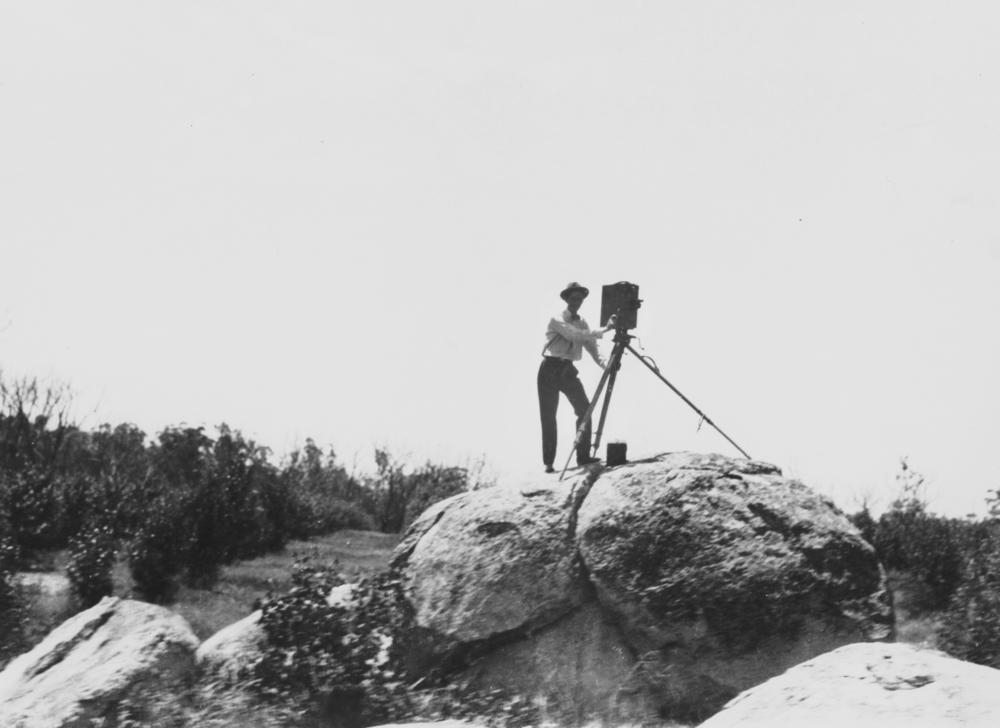
Rhythmus 21

On Books: Anatole France’s Penguin Island

France, Anatole, Penguin Island, New York: Bantam Books, 1958

This is one of the most brilliant books I have ever read. The initial premise concerns a fictional Saint Mael, an avid proselytizer whose travelling boat one day through the work of the devil is carried off to a distant frozen tundra. The good but aged and impossibly near-sighted Saint, finding himself surrounded by quiet, well-behaved men of short stature, proceeds to lecture and then baptize his newest batch of converts, unaware that they are not men, but penguins. This naturally creates an uproar in heaven over what to do with the poor creatures, for although the baptism, being proper in form if not in function, is decided over objections to be valid (“But by this reasoning… one might baptize…not only a bird or a quadruped, but also an inanimate object…that table would be Christian!” p. 17), the penguins lack the capacity to achieve salvation and will thus be condemned to eternal hellfire if left alone, which hardly seems fair. And after considerable argument among the Lord and the Saints, it is decided to change the penguins into men.

That, to me, was the only disappointing part of the book. I had imagined that the penguins would, upon becoming civilized, retain some of their original appearance and character, and be examined in that light. But as humans with a very short history, instead they are as an isolated aboriginal tribe which is plunged unexpectedly into modernity, discovering for the first time clothing, personal property, government, and so on, and then experiencing the main phases of human history, described in satirical and unflattering fashion. France’s portrait of these new citizens is amazingly well-done, very humorous and surprisingly undated for a century-old work. I personally found the first few chapters the most amusing, particularly when the Lord is discussing his own character. In responding to the suggestion that the current generation of penguins be allowed to burn, that the problem may resolve of its own accord with their unbaptized offspring, God says:

“You propose a…solution…that accords with my wisdom. But it does not satisfy my mercy. And, although in my essence I am immutable, the longer I endure, the more I incline to mildness. This change of character is evident to anyone who reads my two Testaments…” (p. 22)

“But my foreknowledge must not encroach upon their free will. In order not to impair human liberty, I will be ignorant of what I know, I will thicken upon my eyes the veils I have pierced, and in my blind clear-sightedness I will let myself be surprised by what I have foreseen.” (p. 26)

France’s political observations are as entertaining as his religious ones. One of his characters suggests sarcastically that the rich must not be taxed because “The poor live on the wealth of the rich and that is the reason why that wealth is sacred.” (p. 40) Furthermore, throughout the centuries, the wealthy object to taxation because it is deemed ignoble: “Since the rich refused to pay their just share of the taxes, the poor, as in the past, paid for them.” (p. 179) Instead a flat tax or a sales tax is suggested:

“If you ask a little from each inhabitant without regard to his wealth, you will collect enough for the public necessities and you will have no need to enquire into each citizen’s resources, a thing that would be regarded by all as a most vexatious measure…” (p. 40)

“What is certain is that everyone eats and drinks. Tax people according to what they consume.” (p. 41)

It’s really amazing – trickle-down economics and a cumbersome tax code were perceived to be a problem before they even existed. As the nation of Penguinia survives the centuries, it acquires other problems of human civilization:

“Peoples who have neither commerce nor industry are not obliged to make war, but a business people is forced to adopt a policy of conquest. The number of wars necessarily increases with our productive activity. As soon as one of our industries fails to find a market for its products a war is necessary to open new outlets.” (p. 104)

Government is equally as ludicrous as business. Describing a minister who is driven to distraction by the unfaithfulness of his wife, he writes:

“If he had been in the employment of a private administration this would have been noticed immediately, but it is much more difficult to discover insanity or frenzy in the conduct of affairs of State.” (p. 208)

Nor does France shy away from the subject of sexuality, discussing at length liaisons occurring with and without ulterior motive, both in practice and in theory. Thus one of his characters declares on the subject of virginity:

“The obligation imposed on a girl that she should bring her virginity to her husband comes from the times when girls were married immediately they were of a marriageable age. It is ridiculous that a girl who marries at twenty-five or thirty should be subject to that obligation. You will, perhaps, say that it is a present with which her husband, if she gets one at last, will be gratified; but every moment we see men wooing married women and showing themselves perfectly satisfied to take them as they find them.” (p. 184)

On prostitution and chastity:
“An excellent moral theologian, and a man who in the decadence of the Church has preserved his principles, was very right to teach, in conformity with the doctrine of the Fathers, that while a woman commits a great sin by giving herself for money, she commits a much greater one by giving herself for nothing.” (p. 204)

And finally, quoting a Professor who argues why urban women are more adulterous than their rural counterparts:

“ ‘A woman attracts a civilized man in proportion as her feet make an angle with the ground. If this angle is as much as thirty-five degrees, the attraction becomes acute. For the position of the feet upon the ground determines the whole carriage of the body, and it results that provincial women, since they wear low heels, are not very attractive, and preserve their virtue.’ These conclusions were not generally accepted.” (p. 215)

Accepted or no, such conclusions are pretty entertaining, and if this is a representative sample of Anatole France’s work, I will certainly be reading more of it.

On Popular Music: Katy Perry’s E.T.

Normally I am not a fan of Katy Perry; in fact, every time I hear “Wide Awake” come on the radio, I wish I was fast asleep. But this one I actually like. Not only do I not turn it off the second I hear it playing, I crank up my stereo to its maximum, no matter how old or large the crowd waiting at the stoplight with me. It’s fortunate that it’s got a funky backbeat, though, because lyrically, it’s conceptually strange. The singer appears to be describing her desire to have a sexual encounter with an alien life form. We have a term in English to describe the unusual kink of performing sex acts with members of another species. It’s called bestiality. Personally, I think it’s nice that the general public gets to hear about a perversion so taboo that all but the most hardcore pornographers shy away from it.  

Anyway, in addition to the standard version, I’ve also heard an alternate version of the song, featuring an introduction and later a vocal interlude by Kanye West, the latter part of which goes like this:

First, I’ma disrobe you,
Then I’ma probe you,
See, I abducted you,
So I tell you what to do, I tell you what to do, what to do. . .

An odd interjection, harshly delivered, and what is most intriguing about it is how it completely alters the character of the song. Without the interlude, the piece arguably centers on feminine desire; the singer perceives the extraterrestrial as a being who is “hypnotizing” and “magnetizing” and whose “kiss is cosmic.” The refrain further reflects her desire: “Kiss me” and “Take me” are its main features. However, the additional verse switches the focus of desire from the female to the male; the alien is not only now in charge, but has proclaimed his right as the kidnapper to subject his victim to his will. In short, we now have a rape story. 

But perhaps this was the underlying nature of the “kink” under discussion, after all. Consider the lines “Want to be a victim; ready for abduction,” and “Inject me with your love then fill me with your poison.” Although these words indicate submission rather than aggression, they are nonetheless suggestive of a submission which the performer finds desirable. In other words, it is being subject to the will of the alien that arouses sexual desire in the female; her sexual empowerment is derived from willingly submitting herself to it.

Of course, the bizarre concept of being “probed” by aliens, often with an implied (or even overt) sexual component, has been around as long as there have been abduction stories. This is perhaps a mark of human arrogance, for the notion that creatures from another planet would find us sexually desirable makes roughly as much sense as the idea that humans might be attracted to chimps or orangutans. All I can say is, if the aliens ever do come to call, we had better hope that they have Star Trek-quality devices at their disposal for their probing needs, for, if not, they are likely to attempt to unlock the secrets of our bodies in much the same way that we investigate the inner workings of the animals on our own planet. Not through penetration, but through dissection.