Category Archives: Not-Always-So-Popular Culture

Words Reveal What Masks Conceal: An Essay on Halloween

When I was in the seventh grade, my English teacher assigned us a creative writing project for Halloween. We were to compose short stories, which we would then read aloud before the class, coupled with a competition of sorts in which the students would vote on who had written the best one.

Now in my pre-teen years, I was not what you would term the most popular kid in school. Perhaps it was those horrible “Student-of-the-Month” photos of me hanging in the main hallway, which they somehow always managed to take right after gym when my hair was flying every which way, or perhaps it was the oxford shirts and corduroy trousers in which my mother dressed me because I refused to participate in ridiculous wastes of time like school-clothes shopping. It certainly didn’t help that in addition to being smart and studious, I was also very, very shy, which led many to believe that I was stuck-up. I suppose if you’re naturally adept at making conversation, it’s difficult to understand that other kids might not be.

You can therefore easily picture the scene in the classroom that day: the anxious adolescent girl slouched in her seat, sweat drenching the armpits of her button-up shirt as she watched the clock, fervently hoping that time would run out before her turn came. You can imagine my nervousness when, five minutes before the bell, my teacher called me to the front of the class, the last reader to go; my terror as I stumbled up to her desk clutching the half-sheets of paper on which I’d scrawled my assignment. As usual, I had pushed the limits on the suggested length – my story was at least twice as long as anyone else’s – and the only saving grace of this enforced public humiliation, I thought, was that I would undoubtedly run out of time to finish it before the lunch bell rang.

Tucking my loose hair back behind my ears and focusing my eyes firmly on my papers, I began to read. It turned out that reading wasn’t so bad; unlike giving an oral report, you didn’t actually have to look at any of the other students. And it was a decent story, I reflected as I flipped through the pages, concentrating hard on not losing my place. At least my classmates were sitting silently, which made them easier to ignore.

At last I reached the climax of my tale, which was where it turned gruesome. The main character had gotten trapped in a fire, and I remember describing, in disgusting detail, the sizzle of the hairs frying on his arms as the hot flames neared. I remember describing the flames devouring his flesh, great flaps of it falling from his skeleton as his skin seared away. And I remember the silence of the classroom; I remember it breaking, the moans and groans that swelled all around me as I depicted my main character’s excruciating demise, only to be interrupted by the harsh clanging of the bell.

No one stirred; no one rose; no one left. I glanced at my teacher, who nodded. The other students sat rapt while I finished my story, and they applauded when I was done. There was no question that I had won the contest.

I was pleased that my story had gone over well, of course, but it wasn’t until the following week, when other kids were still coming up to talk to me about it, that I understood that I had somehow made an impression that went beyond my gruesome, graphic horror story. It was as if I had revealed that somewhere beneath that classic nerdy exterior was a real honest-to-goodness person, a kid who thought about things like destruction and death, and flames eating flesh, and how best to describe such horrific events.

I’ve never been big on Halloween, myself. I’ve never liked the pressure of having to pick out a costume and then explain why I chose it; I’ve never even understood the appeal of dressing up and playing pretend. I have other ways of exploring my dark side. Nowadays you won’t find me in a starched, striped shirt, or in old-fashioned slacks, but don’t be fooled by the sweats and sports bra in which you’ll typically see me lounging about the house, because that’s not who I am, either. It’s just a costume; an innocuous mask meant to show nothing, to reveal nothing, to suggest nothing. My thoughts are inside me. They can never be exposed by a mere choice of outfit.

Jack-O-Lantern


The 18th Annual Legendary Boonville Beer Festival: May 3rd, 2014

https://avbc.com/ai1ec_event/18th-annual-legendary-boonville-beer-festival-2/?instance_id=17863

The 18th Annual Legendary Boonville Beer Festival: The bahlest steinber hornin’, chiggrul gormin’ tidrick in the heelch of the Boont Region!

Or so they say up at Anderson Valley Brewing Company, where they host this annual event at the Mendocino County Fairgrounds.

Now I can’t say that Boonville is my favorite of the beer festivals I regularly attend. I personally prefer the festivals at The Bistro in Hayward, most notable of which are the Double IPA festival in February and the Wood-Aged festival in November. In terms of selection and style, these fests offer a larger variety of the kinds of beers I really, really like, and more importantly, they tend to feature a greater number of beers I simply don’t see in my regional market.

However, no local beer festival can match the power of Boonville for sheer good time. That’s because it’s not merely a beer festival; it’s a weekend-long party complete with camping, barbecuing, loud music, and vast numbers of otherwise quiet, sober people generally making drunken asses of themselves. Not me, of course, because to the best of my recollection I have never, ever made a fool of myself, and I’m quite certain that all of the stories concerning my behavior during my rare nights of overindulging have been entirely fabricated.

I won’t regale you with noteworthy tales of all of my prior Boonvilles, many of which are incredibly embarrassing either to me personally or to people dear to my heart, but here are a few of the life-changing observations I made at last year’s festival:

Bright, sunny and ninety-five is way better than rainy, muddy, and fifty-five, especially when your friends who arrive first are smart enough and early enough to pick out a shady camping site.
A wise woman drinks beer with breakfast, not before.
Patience is a virtue that women develop while waiting in line for the “real” bathroom when the Port-A-Potties are full.
Patience is a virtue that men develop while waiting for women to emerge from the “real” bathroom.
A man who is so anxious to get a beer that he shoves a woman out of his way has no right to complain when she shoves back. Not even if, in so doing, she spills said beer.
A true friend is someone who waits with you in the line for the Port-A-Potty just to be able to hold your beer while you’re in there.
Plastic cups don’t break with the same joyful ringing clarity as glass ones, but at least no one loses an eye.
It’s rarely worth standing in the long line for that special beer that some brewery always decides to put on exactly at four o’clock, but you’ll be sorry if you don’t do it anyway.
You can’t appreciate really good beer until you have some bad ones.
Caterpillars do not improve the flavor of tenderloin.
Just because there’s a bridge doesn’t mean there’s anything special on the other side of it.
Dancing on the roof of an RV does not make you look foolish. Dancing unenthusiastically does.
Friends are people who can drink with you all weekend and still like you afterwards.
Blessed are they who for once find a quiet camping spot and don’t have to listen to those
#$^@&$! jerks screaming and running around all night.
Everyone looks like crap the morning after a beer festival, either because they drank too much or because you did.
Choose your first three beers well; by the end of the festival, they will be the only ones you remember.

BBF-18-VectorColor-1024x436


Go back

Your message has been sent

Warning
Warning
Warning
Warning
Warning

Warning.


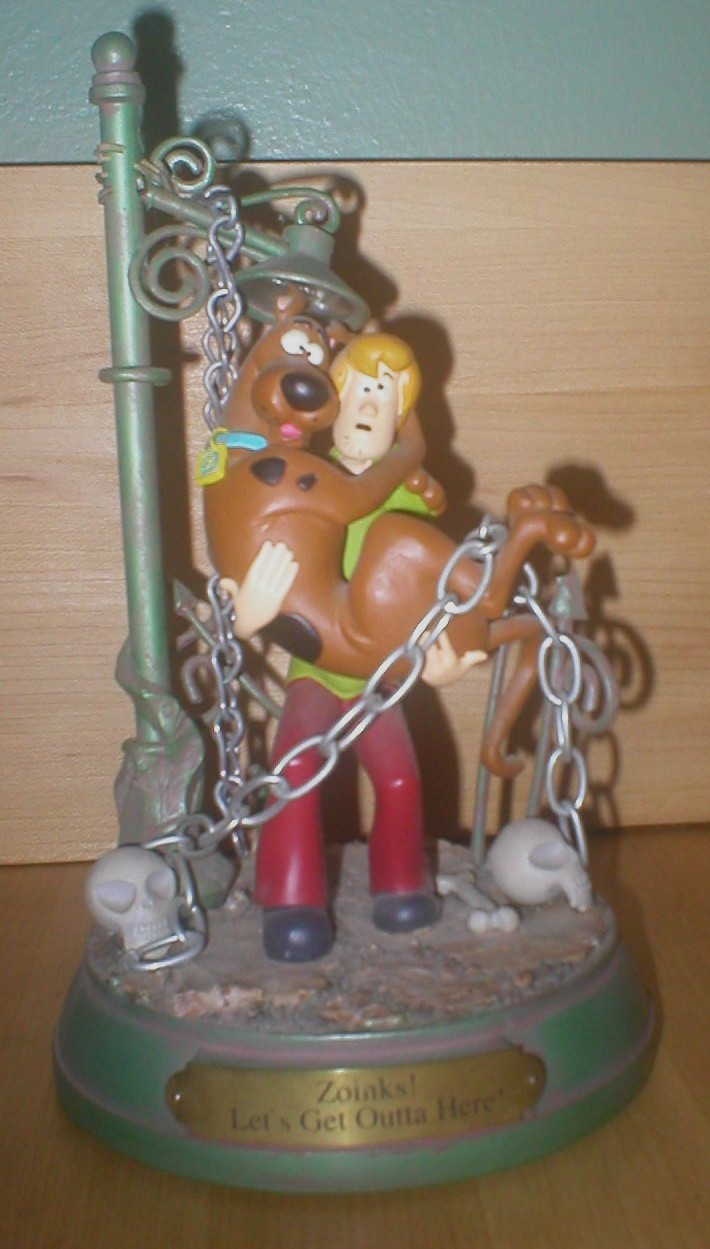
What I Learned from Watching Scooby-Doo

Scooby-Doo. Amazing, isn’t it? Here it is, nearly fifty years after the first episode aired, and Scooby-Doo movies and cartoons are still being made.

I’ll admit that I haven’t watched any of the newer programs myself, so I can’t speak as to their quality. I loved the original Scooby-Doo shows way too much to taint my memory of them with some newer (and undoubtedly less charming) version of a classic. Besides, I still watch the reruns from time and time, and you know what? I’ll be darned if they aren’t just as good as they were when I was a kid. Of course, maybe I appreciate them on a slightly different level now.

Because it turns out that the Scooby-Doo shows, in their early manifestations, weren’t about a gang of teenagers and a talking dog. They weren’t about how many ways you can work chocolate sauce into a quadruple-decker sandwich, or how easily villains are fooled by cheap, impromptu disguises. They weren’t even about solving mysteries. What Scooby-Doo was really about was the triumph of reason over superstition. Because what devotees of Scooby-Doo learned from watching the show was simply this: There is a rational explanation for everything.

It’s brilliantly done. You have Fred and Velma, the logical leaders of the group, who are consistently convinced that there’s no such thing as ghosts and are determined to prove it. You have Daphne, who stands on the fence, being sometimes a believer and sometimes a skeptic. And finally you have Scooby and Shaggy, the superstitious “cowards” who fall prey to every supernatural trick. Yet they’re the ones who always end up having to lure their paranormal pursuers into the gang’s cleverly designed trap. They’re the ones who constantly have to find the courage to confront their fears, and who ultimately reap the greatest satisfaction from uncovering the truth. And they’re undeniably our favorites, the ones we identify with and support.

You can’t help but root for the hungry young man and his faithful and equally hungry Great Dane, to hope that they’ll learn to trust the logic of their peers even as we ourselves learn to trust it. Because the show proves, time and again, how needless their fear really is, how silly their conviction that werewolves and mummies and monsters are real. And as viewers, we know better, because we know how it always ends. The phosphorescent alien footprints trailing across a barren field. The eerie thumping of a mysterious and invisible drummer. The green ghosts emerging from hidden hallways and secret staircases to taunt and terrorize our valiant crew. Week after week, we watch and we learn.

There’s no such thing as ghosts. It’s always a trick, a scheme devised by mere mortal men to keep people away from the site of the haunting or other creepy phenomenon. There’s always a plot to abscond with someone else’s treasure, or to foil the attempts of greedy neighbors to abscond with one’s own. No matter how frightening or eerie or persuasive the phantom, it always turns out to be a man in disguise.

That’s what makes Scooby-Doo the ultimate symbol of my generation. It’s why we think the way we do; why we champion proof and science, and why we’ve discarded spooks and angels. It’s why when a door slams shut in the middle of the night we suspect a prowler and not a poltergeist. It’s why we blame trick photography and digital imaging for producing shapes and shadows we can’t discern or identify. It’s why we’ve lost belief in demonic possession and intensified our interest in mental illness, and why we hope to find aliens and not to fight them. Because we know that crime is real. That evil is real. That fear is real. But we also know that no supernatural power lies behind them. Only a human, just like us.

Is it better this way? Perhaps. Except that we’ve gone beyond the golden Scooby-Doo moment of discovering that the spirit of which we were deathly afraid is just a run-of-the-mill crook playing a trick. There’s no revelation here, no joy in finally uncovering the man behind the mask. Because we never thought for a moment that the ghost was real. We never believed it was anything more than another troubled human taking what wasn’t theirs and scaring people in the process. Because that’s how thoroughly we understand humans now, how much more dangerous they are than demons and phantoms. Fear doesn’t come from outer space or beyond the grave anymore. It’s right here beside us, sleeping in the upstairs apartment or working in the next tiny cubicle or tramping down the same tiled hallway.

Science has triumphed. Rationality has triumphed. But they haven’t turned our world into a prettier or less intimidating place. Rather they’ve made us aware that what humans harbor in the darkest depths of their hearts is more frightening by far than any monster we could have imagined. We expect monsters to kill and destroy without thinking, and without reason. We don’t expect spirits to care whom they frighten, or whom they hurt. But we expect humans to behave better than beasts or bogeymen. How do we explain it when they don’t?

Scooby-Doo understands. Because here, in the real world, behind every event we can’t explain, there also lies a mystery to unravel. Perhaps it’s not the mystery we were expecting, because it’s not merely a matter of proving that the ghost is a fake, or that there’s a real live person behind it. This infinitely more complex riddle can never be solved in twenty-two minutes with a jumbo box of laundry detergent and an industrial-sized fan. It’s the mystery of human behavior, of what truly transpires on the other side of the masks that all of us wear.

OLYMPUS DIGITAL CAMERA

Dust Off Your Fedora and Reload the Gun in Your Purse: Noir City is Coming to Town!

http://noircity.com/

Today marks the start of the twelfth annual “Noir City,” a ten-day exhibition of my all-time favorite movie genre, film noir. The festival (which I affectionately call “NoirFest,”) is held at the amazing old-time movie palace in San Francisco, The Castro Theatre. If you’ve never seen the inside of this place, it’s worth a visit even if you don’t stop to watch a film. (Yes, in case you’re wondering, it does actually have a piano that comes up through the floor.) Parking is scarce, as you might imagine, but it’s only a twenty-minute walk from BART – up a very steep hill. I have yet to watch a movie at The Castro without being drenched in sweat. I’m not sure whether that makes the experience better or worse. Maybe it depends on the genre. 

The festival is great fun, but perhaps not always quite what you would expect. Film noir being what it is, you might think the audience would be serious, perhaps even a little glum as they ruminate over the crimes of bitter men and the misdeeds of the unconscionable women they love. Not so. Laughter abounds when the dialogue is particularly witty, clever, or racy. Applause breaks out when actors and actresses barely remembered today appear on-screen. Audience members may stand when Film Noir Foundation’s founder and president Eddie Muller is introduced. He deserves the ovation. This man has been personally responsible for leading the charge in the cause to save film noir from extinction, and with an astonishing amount of success. I wonder if he knew, when he conceived this project, how many of us there were out there, just waiting for someone to come along and give us what we’ve always wanted – a chance to experience the movies we love from a generation gone long before us.

What has continually amazed me is that in every year before this one they’ve managed to find a special guest from the era to make a personal appearance. What a thrill it must have been for these little old ladies, most of whom were B-film stars seven decades ago, to find themselves once again on stage, the recipients of undying admiration and affection from a throng of enthusiastic admirers! I see that this year, however, there’s to be no special guest at the Saturday night premiere. This makes me very sad. Film noir may live on, but the men and women of noir do not… 

The focus this year is on foreign noir. Purists will tell you that noir is an American genre, which, for a host of reasons I won’t get into here, is arguably true. However, there’s no doubt that the dark perspective and jaded worldview that characterize film noir proper also appear in other movies made around the world at the time. Indeed, this makes a great deal of sense; since noir was born in the World War II era, and, in my mind, was in many ways linked to the mood engendered by the war, one would expect its themes to permeate international cinema as well. I’m actually looking forward to comparing some of their creations to some of ours.

Noir City runs from January 24th through February 2nd. Hope to see you there!

How New Year’s Resolutions Weaken Our Resolve

It’s the first of January again, and all over the world, people are making personal resolutions for 2014. Amazing what a date can do, isn’t it? Millions of humans scattered around the globe, all simultaneously attempting to better their lives by altering their own behavior in positive ways. For many, a new year offers an incentive, a reason to push towards self-improvement or greater satisfaction with one’s life and one’s being. And what better day to feel as if you’re starting over than New Year’s Day? It’s a day of reflection on the year gone by and on the year yet to come. It’s a day in which to consider whether we’re moving towards the goals we’ve set for ourselves, or whether we need to change the paths we’re on in order to come closer to achieving them. And the making of resolutions is perhaps the vital final step of this process, because there’s little point in evaluating the state of our lives if we don’t then utilize our conclusions to bring us one step closer to happiness.

The trouble with the New Year’s resolution is that, by its very nature, it doesn’t take effect until after the end of the current year. And in a backhanded way, this encourages us to wait to act upon our resolve. We don’t exercise in December because we’ve decided to get in shape after the holidays. We don’t quit smoking in October because, without the motivation of the New Year’s resolution, we’re afraid we’ll fail. We don’t start tucking money away in August for that dream vacation we’ve always wanted to take, because there’s school clothes shopping to do, and then the holidays are coming up, and once again, we’ve postponed that project to another year.

And then what happens when we, as we inevitably must, fail to keep some of those resolutions we made in so much earnest? We wait again. We try again – the following year. How much of our lives are wasted waiting for this imaginary turning point to roll around so that we can make those changes we believe are so vital to our well-being and sense of fulfillment?

This is the core of the problem with marking time in our lives by special occasions – it causes us to neglect all of the everyday occasions that would have served us equally as well in helping us to attain our goals. Maybe your sweetheart expects you to bring her flowers on Valentine’s Day, but she’ll be much more impressed by the bouquet you bring in November. Chocolate cake is sweeter when it’s not baked on your birthday. Why wait until New Year’s Eve to have a beer and hang out with your friends? Won’t your mom be more pleased if you call her in March just to chat, then if you wait until May to wish her a Happy Mother’s Day?

I don’t ever want to wait until January 1st to change my life. I might want to quit my job on July the 15th, or start writing a book on September the 24th. It doesn’t need to be the first of the year or the first of the month before I decide to move forward with my resolutions; any given Monday will do. I’ll derive just as much joy from turning my life around at 3 o’clock on a Tuesday afternoon in June, as at midnight on a Wednesday in January.

So that’s my New Year’s resolution. Never again to wait for a new year to arrive before I make my resolve. Never again to pretend that January will be soon enough for me or my life to change. It isn’t.   

What Doesn’t Kill You Does Not Make You Stronger

Seriously, what is the deal in popular music with this worn-out and woefully inaccurate cliché?

The Kelly Clarkson hit with the phrase in its title. Kanye West’s otherwise entertaining Stronger. Will.I.Am’s That Power. Plus a host of other songs by artists such as Theory of a Deadman, Pain, Dappy, Saving Jane, Shontelle, KISS, Clay Aiken, Solarward, Kataklysm, Seventh Key, Heltah Skeltah, and Carpathian, among others.

First of all, shame on all of you for not coming up with more original song lyrics. It seems to me as if a musician would at least want to use a different cliché from the one everyone else is using. But maybe I’m being too harsh here. There aren’t many words that rhyme with “longer,” after all. It’s not like “Every cloud has a silver lining,” which has a multitude of rhyming possibilities. Pining, dining, whining, signing… imagine the poetry that might be constructed around “mining!”

What really irritates me about this overused phrase is not the words themselves, but the concept behind them. It’s true that most of the time, if you survive a viral illness, you’ll develop immunity to the germ that caused it and will arguably be “stronger” because of that. But certainly in the realm of physical injury, anyone who has ever sprained a knee or slipped a disc knows how vulnerable that spot becomes after you’ve hurt it once. Yet consider this line from The Fighter by Gym Class Heroes (which is a band I generally like, by the way):

“Every time you fall it’s only making your chin strong.”

Now that can’t be true, can it? I would think that smacking your chin repeatedly would cause little hairline fractures to form along the jawline, setting you up for a break later on. Maybe what they mean is that repeated blows to the face deaden the nerves, gradually causing you to feel less pain. That would certainly make sense; otherwise how would boxers stand the abuse?

And maybe I’m being too literal, interpreting this in the physical sense. I suppose one could argue that suffering a mental trauma might make a person less vulnerable to emotional dysfunction in future. But I think you’d be hard-pressed to find a psychiatrist who would agree with that. Don’t we more often hear of repeated crises referred to as “the straw that broke that camel’s back,” to employ another well-worn platitude? And what about Post-Traumatic Stress Disorder? Tell front-line soldiers that they’re stronger for not being killed in action and see where that gets you.

No, the problem is that people want to believe that they’re getting something out of their suffering; that something positive results from pain. And maybe sometimes it does. Suffering can change a person for the better. There’s value in learning to endure pain. But for the most part it’s a trick; a deception practiced upon one’s own mind to make hardship easier to bear.

The irony is – perhaps it does. Maybe the delusion itself is what prompts us to “dust ourselves off” and “get back on the horse.” Maybe that’s what makes us “look for the silver lining” even when “the chips are down.” Maybe that’s how, when our world is at its darkest, we are able to force ourselves to wait patiently for the dawn.

What doesn’t kill you doesn’t make you stronger. But maybe believing it does.    

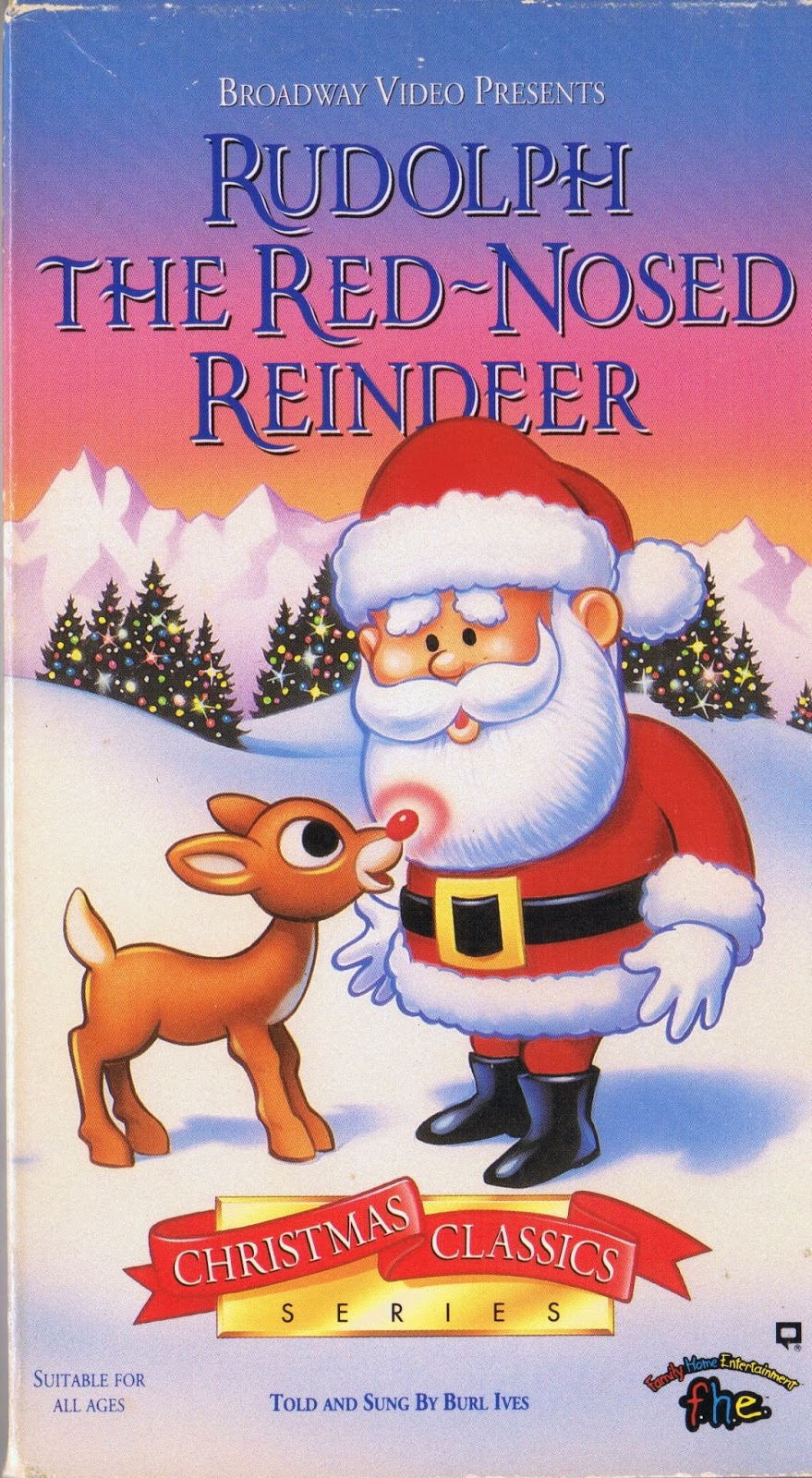
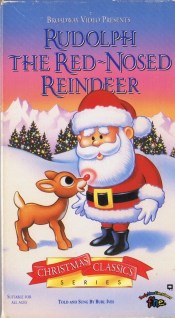
Rudolph the Red-Nosed Reindeer: A Critical Analysis

Well, the holiday season is rapidly approaching and, as it is every year, my mind is inevitably drawn into contemplation of the true spirit of Christmas – 1970s Christmas specials!

Yes, it’s true – Christmas was never more meaningful than it was during that wondrous era in which we celebrated the most important holiday of a child’s year not by going to church, not by caroling, not by hitting the mall at midnight on the day after Thanksgiving, but by plopping our butts down in front of a nineteen-inch black-and-white at 8 pm on Saturday nights in December and losing ourselves in these classic tales of childish wonder. Rudolph the Red-Nosed Reindeer, the story of an outcast who saves Christmas. Santa Claus is Coming to Town, the story of an outcast who invents Christmas as we know it today. How the Grinch Stole Christmas, the story of an outcast who… Wait, I’m starting to sense a pattern here.

Now, I am not going to confess that I still watch these specials every year, and sometimes more than once, even with no children in sight. I will decline to admit that I have all of my favorites on both video and DVD, or that the one day of the year in which even I will almost certainly tear up is when I witness The Grinch having his big change of heart. I will, however, be happy to share my thoughts on that most thought-provoking of Claymation creations – the story of Rudolph.

Yes, because there’s more to the Rudolph the Red-Nosed Reindeer than the patently obvious lesson about the worth and value of misfits. This 1964 Rankin and Bass drama is chock full of enough subtext to satisfy the most diehard of film enthusiasts, and it is still, nearly fifty years later, remarkably evocative of the socially progressive era in which it was born. Let’s look at how.

1. The authority figures are jerks. There’s the nasty coach, who, after Rudolph’s secret is revealed, informs the other children snidely: “From now on, we won’t let Rudolph play in any more reindeer games, right? Right.” Look at Rudolph’s dad, Donner, who forces him to wear a fake nose, which is not only uncomfortable, but wholly undermines Rudolph’s budding self-esteem. “You’ll like it and wear it!” he commands. “There are more important things than comfort. Self-respect!” Consider Clarice’s father, who reaffirms Rudolph’s worthlessness by rejecting Rudolph on sight: “No doe of mine is going to be seen with a… with a red-nosed reindeer!” And how about the mean elf-boss, who yells at Hermey and then (illegally) refuses to give him his break until he finishes his work?

And then there’s the big man himself, Santa Claus. Not content with merely trashing the new elf song his pint-sized slaves have spent so much time writing and rehearsing, he quickly turns his temper to the subject of Rudolph. “You should be ashamed of yourself,” he tells Donner. For what, we wonder? For siring a red-nosed son? “What a pity – he had a nice take-off, too.” In other words, Santa is so closed-minded that he can’t even consider the possibility of putting someone who’s a little different on his team, no matter how good he is or how much potential he has. It’s the attitude of guys like him that gave rise to the idea of Equal Opportunity Employment.

The message is as clear as a bright red bulb on a foggy winter night. Don’t trust anyone over 30!

2. The one authority figure who isn’t a jerk is King Moonracer, that good-looking magical lion. Although he speaks smoothly and with conviction, he is, unfortunately, an idiot. Every evening he circles the entire earth, collecting toys that no little girl or boy loves, and bringing them to his Island of Misfit Toys. Yet practically the first thing he says to Rudolph on meeting him is, “When one day you return to Christmastown, would you tell Santa about our misfit toys? I’m sure he could find children who would be happy with them.”

Okay, Your Highness, you may seem majestic with your wings and your crown and your cool castle and all, but you need better advisers. You’re telling me that you circle the entire earth every night seeking abandoned toys, but you never once thought to stop off at the North Pole and talk to Santa yourself? Heck, I mean, it’s not even that far – no farther than one can travel by ice floe, at any rate. The misfits may be all right, but the ruler of the misfits… Well, he obviously isn’t roaring with a full mane.

I’m not quite certain about the intended lesson here, though. Is it merely a dig at autocratic rule, or are we being taught that monarchy consists largely of exercises in futility? In either case, it’s none too flattering to the man in charge – and in the end, it’s the brash young upstart who actually solves the problem of the misfit toys.

3. There’s a hint of underlying feminism. When Rudolph goes missing, Donner naturally decides to go out looking for him. “Mrs. Donner wanted to go along, too,” narrator Burl Ives assures us. “No! This is man’s work!” Donner blusters in response. But the days of mindless obedience to one’s husband are passing. “No sooner did the man of the house leave than Mrs. Donner and Clarice decided to strike out on their own…” It’s also interesting that all of them – male and females alike – wind up in the cave of the Abominable Snow Monster. The buck, it seems, really was no better equipped to take care of himself than the ladies.

Notice, too, that the women aren’t jerks like the men are, perhaps because they have no actual authority. Why, that Clarice is downright sweet. She doesn’t laugh along with the others; rather, she forces Rudolph to keep his promise to walk her home. She sings to the unfortunate misfit to make him feel better. She even defends his “deformity,” declaring, “I think it’s a handsome nose! Much better than that silly false one you were wearing.” She’s kind of a forward gal, too. The way she whispers “I think you’re cute!” into Rudolph’s ear just before takeoff practice, the way she nuzzles noses with him on their first date – this is not a doe who’s suffering from sexual repression.

Strong, independent, free-thinking females – you can practically see women’s lib being born right in front of your eyes.

4. It’s about coming-of-age. Because there’s no need for Rudolph to actually get rid of his red nose. He just needs to learn to control it. Am I right? The young Rudolph’s “blinkin’ beak” goes off at random, shocking nearby observers with both the shining light and the horrible high-pitched whine that accompanies it. Indeed, his secret is discovered during one such unexpected episode – and worse, he and his friends are almost caught by The Abominable during another. But by the end, Rudolph is flicking that thing on and off on command, and that’s the point at which it becomes useful – even desirable – to Santa and the others.

“Control! Control! You must learn control!” Yoda scolds Luke Skywalker, another youngster with special powers. And what about Harry Potter? There’s a story that’s all about learning self-control. Misfit or no, Rudolph, too, must gain mastery over his body and over his emotions before he can become a productive member of society.

And that, of course, is the quintessence of growing up.

5. It’s about the increasing acceptance of babies born out of wedlock. Surprising, but quite possibly true. Have you ever noticed that Hermey has rounded ears? Strange, isn’t it? Not only is he the only elf who doesn’t like to make toys, he’s also the only one with round ears. Indeed, except for his stature and classy powder-blue attire, he might not be an elf at all. He might even be – gasp – a human!

Of course, among elves, the outcast would naturally be human; the anti-Vulcan, if you will. But why did Rankin and Bass decide not to give Hermey pointy ears? Why did they decide to make him a misfit not just by personality, but also by physical characteristic?

The answer seems obvious. Hermey is – as such children used to be called – illegitimate. Because if Santa and the Missus are the only humans in Christmastown, then where did Hermey get those rounded ears? Hmm, maybe Santa’s a jerk in more ways than we thought; taking advantage of an employee… No, wait. There’s also Yukon Cornelius. Maybe he popped into town one day and decided to pop in on some cute girl-elf’s cottage. Oh, wow. What if Hermey was in fact Yukon Cornelius’ son? Think about it – they reunite, escape death, hang out, solve problems together… I may have to compose my very first piece of fan fiction.

There’s no question that the ranks of single mothers grew in the sixties – the idea of free love was bound to have consequences, after all – and perhaps, in a time in which the term “bastard” still prevailed, Rudolph gently reminded us not to judge the child by the actions of its parents. It’s a lesson that we’ve apparently learned, because look at us today – even our most respected celebrities are having babies without ever getting married, and without having to apologize for it, either. And their children, too, are no longer scorned or held down by society because of their birth; they are quite as likely to succeed in life, perhaps to become celebrities in their own right, or even, if they’re very lucky and study hard, dentists.


Programs like Rudolph the Red-Nosed Reindeer are arguably the reason why children of my generation grew up the way we did. Consider the lessons it teaches. Question authority, particularly when authority is wrong. Make your own decisions. Judge people by their actions, not by their appearance or their circumstances. Respect those who are different from you. It’s liberal thinking in its broadest, least political sense, and it was born in an era of idealism, in which people really thought it was possible to change the world; in which they truly believed that one person could make a difference.

Rudolph lights the way.
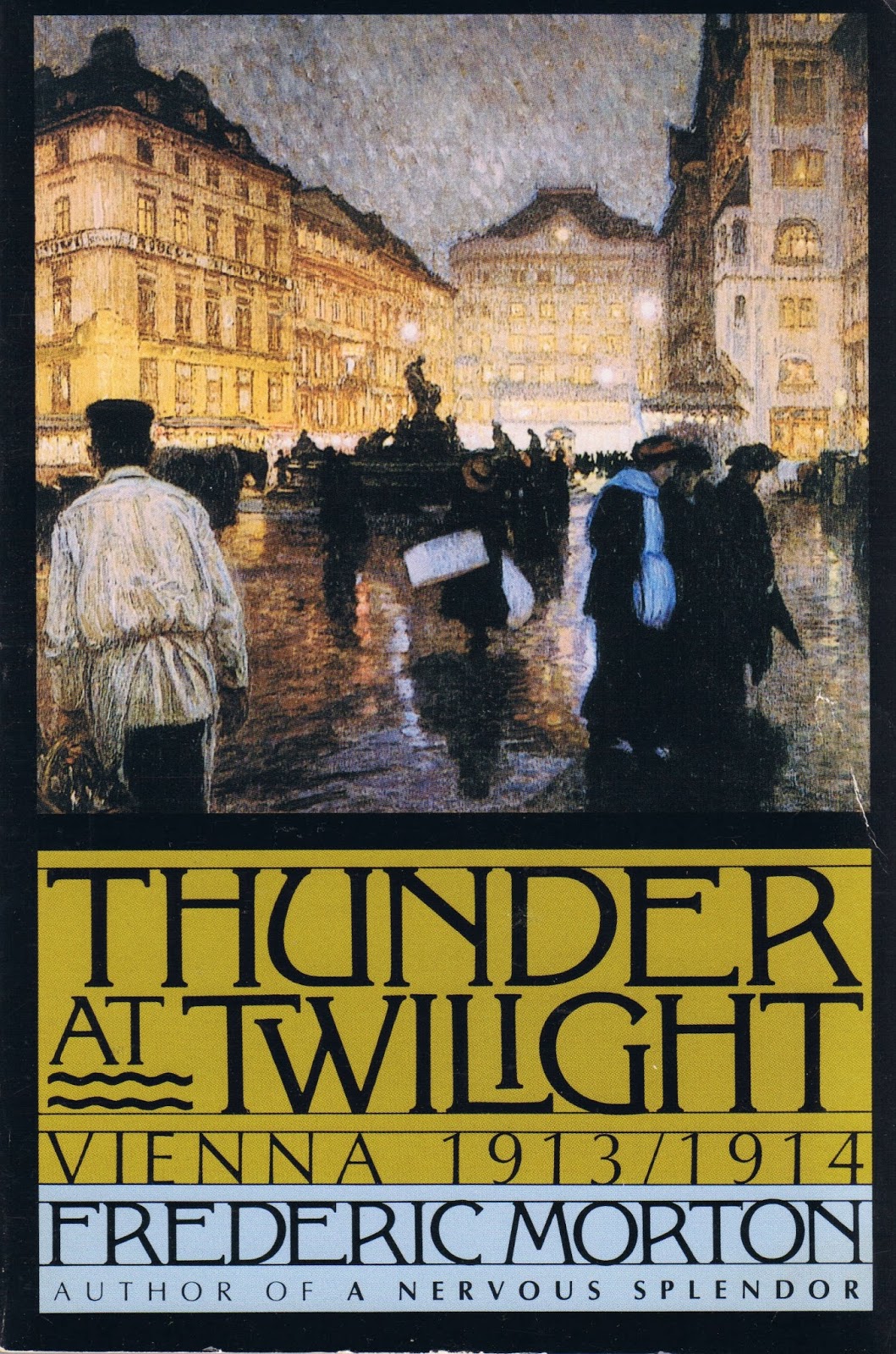
Book Review: Thunder at Twilight: Vienna 1913/1914

Morton, Frederic, Thunder at Twilight: Vienna 1913/1914, Charles Scribner’s Sons: New York, 1989.

Thunder at Twilight offers a detailed history – really almost an exposé – of the conditions of Viennese life that preceded the assassination of Archduke Franz Ferdinand, which, as we all know, indirectly led to the First World War. The book is extraordinarily well-researched; the author even goes so far as to relay to us the weather on days of particular importance, and to describe which writers and operas were popular at the time. In other words, it creates a very large picture of Viennese society – a society on the verge of cataclysm – by revealing the minutest details of everyday life in a city in turmoil, and, by extension, a Europe in turmoil.   

What’s particularly interesting and most unique about this book is the way it examines its chosen moment in history by tracing the thoughts and interactions of a variety of important figures of its time. Thus not only are we offered insight into the life of Emperor Franz Joseph, and of the Archduke’s eventual assassins, but also of Adolf Hitler, who was then residing in Vienna as an unknown painter, and Leon Trotsky, who had made of Vienna a temporary home, and even Josef Stalin, who visited the city during these crucial years. Even the story of Sigmund Freud is deftly interwoven into this fascinating mix of individual histories, thus providing a perspective on the psychoanalytical as well as the political thought of the that era.

It is perhaps because of this unusual presentation that Morton manages to strike us with particularly fresh observations on the very essence of Viennese life. He remarks, for example, that Freud’s theory of the id-ego-superego parallels the structure of the old Viennese government. By focusing on slights on the Archduke’s wife, a mere Duchess who is not permitted royal privileges in accord with the aristocratic distinctions of the time, he effectively illustrates the rigidity of the turn-of-the-century Viennese class system. He notes the power and prevalence of “thunderbolt” imagery in contemporary politics, and imagines the storm that follows as a means of clearing away the stifling air of industrialization. And, ultimately, he concludes that the Great War was a reaction, not to the political assassination alone, but to the changes effected by modernization; to “progress unmoored from God.” Thus he departs somewhat from the oft-heard presumption that World War I was a result of rabid European nationalism; rather he claims that this nationalism was engendered by a vague and even continent-wide dissatisfaction of the people of Europe with their economic and social lives.

All in all, it’s a fascinating book, and well worth the read. I did find the style of writing a bit cheesy at times, and the characterizations of Vienna (of which Morton is a native) occasionally a little harsh. But it also lends a wonderful reality to one’s perception of the situation in Europe a hundred years ago, a climate that resulted in the worst war the world had then known. By looking at the years 1913/1914 through Viennese eyes, the reader can clearly see, can even possibly hope to analyze, the events, both direct and indirect, that led to that war. And this is perhaps the first step towards an understanding of the genesis of all wars.


Who’s the Sexiest, and Why Do We Care?

It’s been a few weeks now since I saw the big news. I’m sure most of you have been thinking about it nonstop since then, too, but for those of you who haven’t, I’ll reiterate.

Scarlet Johansson has been named Esquire Magazine’s Sexiest Woman Alive for the second year in a row.

Okay, headlines like these are the reason I changed my home page to Science Daily. Even if I were a man, I can’t imagine caring who the Sexiest Woman Alive is. Unless, perhaps, she lived on my block, frequented the same grocery store, and was inclined to laugh at my stupid jokes, leading me to believe I actually had a shot. But then I wouldn’t need a magazine to tell me how hot my neighbor is.

But it got me to thinking. Are other animals having these discussions?

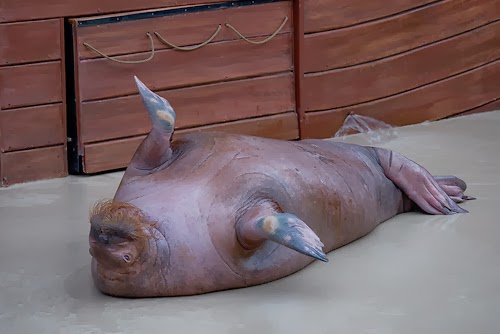
“Now that is the Sexiest Walrus Alive!”

“Look at the tail on that mouse!”

“What a fox!”

Well, of course they’re not. The so-called “lesser” animals would never waste time they could be spending ensuring their own survival seeking out the most attractive coyotes west of the Mississippi, especially when they were never actually going to sleep with them.

So why do people do it? Why do we rank our fellow humans? Why do we obsess over Most Beautiful or Most Handsome?

I don’t know the answer, myself. I can’t really even guess. I’m personally inclined to believe it’s got something to do with having too much time on our hands. Because in the animal kingdom, true leisure is very rare. Even playtime is generally believed to constitute training or preparation for the “real” world. But what useful purpose does choosing the Most Beautiful People in the world serve? It can’t be meaningless; there must be some point to this worldwide yet relatively new phenomenon. There were very few celebrities in the 19th century, after all, and the few there were weren’t especially attractive.

But perhaps there is some evolutionary reasoning behind the beauty contest. Maybe it’s not about objectively evaluating someone’s good looks, or choosing the person with whom you’d most like to have sex. Maybe what it’s actually about is offering up a model for the rest of us to emulate; an example for us ordinary women. See, here, they tell us, look at what qualities of femininity Scarlett Johansson possesses. If you can imitate them, then you will be sought after by all of the other men who agree that these characteristics, taken together, constitute “sexy” and your odds of having quality offspring will increase. In effect, maybe we’re supposed to learn by example; perhaps it is a training exercise of sorts.

But then what’s in it for the men (I mean, beyond the obvious)? Maybe if you’re a man, there’s a biological benefit to having an ideal imaginary mate in mind so you can measure your real-world potential mates against her. Or perhaps male humans are designed in such a way that they aren’t entirely sure of themselves when it comes to selecting mates, and maybe having the consensus of other men as to what constitutes a good woman boosts a man’s confidence that he’s made a sound choice.

Or who knows? Maybe it simply boils down to the fact that most mammals, male and female alike, like shiny things.

It does make one wonder how other animals would behave if they enjoyed as much leisure time as modern-day humans. Of course, there already are a few other species that experience lives of even greater leisure than ours. Our pets. Yes, the dogs and cats and goldfish of the world have plenty of hours in which to mull over the mysteries of science and the meaning of pop culture. They can spend the whole day daydreaming up a romance between themselves and the tabby cat next door or the bitch down the street if they choose. I wonder if they do…

2518e-sexiestwalrusalive

The Sexiest Walrus Alive?