Dust Off Your Fedora and Reload the Gun in Your Purse: Noir City is Coming to Town!

http://noircity.com/

Today marks the start of the twelfth annual “Noir City,” a ten-day exhibition of my all-time favorite movie genre, film noir. The festival (which I affectionately call “NoirFest,”) is held at the amazing old-time movie palace in San Francisco, The Castro Theatre. If you’ve never seen the inside of this place, it’s worth a visit even if you don’t stop to watch a film. (Yes, in case you’re wondering, it does actually have a piano that comes up through the floor.) Parking is scarce, as you might imagine, but it’s only a twenty-minute walk from BART – up a very steep hill. I have yet to watch a movie at The Castro without being drenched in sweat. I’m not sure whether that makes the experience better or worse. Maybe it depends on the genre. 

The festival is great fun, but perhaps not always quite what you would expect. Film noir being what it is, you might think the audience would be serious, perhaps even a little glum as they ruminate over the crimes of bitter men and the misdeeds of the unconscionable women they love. Not so. Laughter abounds when the dialogue is particularly witty, clever, or racy. Applause breaks out when actors and actresses barely remembered today appear on-screen. Audience members may stand when Film Noir Foundation’s founder and president Eddie Muller is introduced. He deserves the ovation. This man has been personally responsible for leading the charge in the cause to save film noir from extinction, and with an astonishing amount of success. I wonder if he knew, when he conceived this project, how many of us there were out there, just waiting for someone to come along and give us what we’ve always wanted – a chance to experience the movies we love from a generation gone long before us.

What has continually amazed me is that in every year before this one they’ve managed to find a special guest from the era to make a personal appearance. What a thrill it must have been for these little old ladies, most of whom were B-film stars seven decades ago, to find themselves once again on stage, the recipients of undying admiration and affection from a throng of enthusiastic admirers! I see that this year, however, there’s to be no special guest at the Saturday night premiere. This makes me very sad. Film noir may live on, but the men and women of noir do not… 

The focus this year is on foreign noir. Purists will tell you that noir is an American genre, which, for a host of reasons I won’t get into here, is arguably true. However, there’s no doubt that the dark perspective and jaded worldview that characterize film noir proper also appear in other movies made around the world at the time. Indeed, this makes a great deal of sense; since noir was born in the World War II era, and, in my mind, was in many ways linked to the mood engendered by the war, one would expect its themes to permeate international cinema as well. I’m actually looking forward to comparing some of their creations to some of ours.

Noir City runs from January 24th through February 2nd. Hope to see you there!

Romance Flash Publication and Author Commentary: Delayed Connection

My flash fiction romance “Delayed Connection” has been published in Romance Flash:

http://romanceflash.com/stories/81-delayed-connection

Kind of a funny story behind this piece. It started out as a story I was writing for The Pittsburgh Flash Fiction Gazette, to which I am a somewhat regular contributor. The original version, which will appear in the Gazette in March, is called “Missed Connection,” and, like much of my erotic flash fiction, it deals with the subject of lost love and is correspondingly dark in tone. Well, when that was done, I liked the idea behind it so much that I wrote another piece with the same premise – a chance meeting at an airport – but in an entirely different style, and with a bona fide happy ending to boot. Similar story, but in two versions: one “dirty,” and one “nice.” I confess I was somewhat surprised at how sweet the “nice” version turned out. Hmm, maybe there’s a romantic in me after all!

I loved the scenario of running into a former love interest at the airport, with one person about to get on a plane, and the other just getting off one. We’ve all been there, right? We’ve all had that fantasy of bumping into someone we once cared about in an unexpected place, and having all the things we always hoped would happen finally happen. It rarely works out that way in real life, of course. You never run into Mr. or Ms. Lost Love ever again, or if you do, it turns out there were solid reasons why you never hooked up in the first place. Still a pleasant fantasy, though. And like Billy Joel says, sometimes a fantasy is all you need.

7b7fd-romanceflashlogo

Why Young People in Japan Have Stopped Having Sex: An Exploration

http://www.theguardian.com/world/2013/oct/20/young-people-japan-stopped-having-sex?CMP=twt_gu

They’re calling it “celibacy syndrome,” a condition in which a large proportion of young Japanese, both men and women, have lost interest in both sex and dating. The numbers are astounding – 45% of Japanese women between 16 and 24 report either disliking or having no interest in sexual contact, with more than a quarter of men in the same demographic agreeing with them.

Hypotheses abound as to why this may be so, primary among which are currently poor economic conditions in Japan as well as lingering outdated conceptions of male and female roles in society. But this can’t be the whole story. Take a country like Afghanistan, which has a terrible economy, but one of the highest birth rates in the world. Look at the United States – we, too, once expected women to fulfill “traditional” roles while men worked to support the family. But society’s opinions change as people do, and there’s no reason to believe that Japan should be an exception.

The mistake, I think, lies in treating this as a social issue. You can’t “fix” this kind of situation with large-scale therapy because it probably isn’t psychological at all. Instead, it’s far more likely that the Japanese are exhibiting a very natural biological response to long-standing conditions in their national environment.

There is one very noteworthy example of a similar and well-documented phenomenon – the panda. For decades scientists have been trying to rescue the panda from extinction, but it’s not only habitat loss that’s endangering the pandas; they have an extremely low birth rate. Even in captivity it’s difficult to persuade pandas to reproduce. Why? Because they refuse to mate.

Pandas are likely unhampered by clinging to traditional conceptions of gender roles. They’re not still living with their parents when they’re thirty-five, and they don’t see being in a relationship as getting in the way of their careers. Yet their mating behavior is extremely reminiscent of what seems to be transpiring among the young Japanese. Maybe the problem is not the double-edged sword it seems to be; maybe it’s not that they’re experiencing habitat loss and that they also have a low birth rate; maybe the habitat loss is instead the cause of the low birth rate.

I read somewhere a long time ago that women who are overweight have a better chance of giving birth to girls. I’ve thought a lot about that. Makes perfect sense, doesn’t it? A high amount of body fat suggests living conditions in which food is abundant; a situation ideal for creating new baby-makers. But then it also stands to reason that people should be less likely to make more people when they live in an environment that is unable to support them. It’s an old story. Think about cacti, patiently waiting for rain to come to the desert so that they may burst forth in their annual bloom. Or about animals with well-defined mating seasons; these creatures are hard-wired to give birth when food sources will be adequate. Are people any different?

In industrialized nations, birth rates have been declining world-wide over the last century. Indeed, certain countries (like Japan) have declining populations because they no longer produce enough new children to offset the number of its citizens who die. The typical culprits presumed to be associated with this international trend are shifting social values, women joining the workforce, and broad access to contraception. But what if those factors are not causes, but effects?

Among other species, the self-limiting nature of a particular population is often obvious. An overabundance of deer will trigger an increase in the number of wolves available to prey upon them until the increased number of wolves can no longer be supported by the reduced number of deer. Humans, of course, have few predators (besides other humans) and some of our deadliest known diseases have largely been controlled by advances in medicine. And in developed countries at least, hunger is comparatively rare. Yet the industrialized nations are huge consumers of natural resources; far more rapacious than their poorer counterparts. Is it possible that on the most basic, chemical level, human bodies, too, recognize when population growth needs to stop?

Japan has the lowest birth rate of any country in the world. It also has the longest average life expectancy. Similarly, nations at the highest end of the birth rate scale (particularly the so-called Third World countries of Africa) have the lowest life expectancies – as low as 47 years in a nation like Sierra Leone, versus 83 years in Japan. Few would argue that Africa has such a high birth rate because its economy is so strong and the prospects for young families so glowing. It seems clear, rather, that with the comparatively high death rate, there is simply more room in that environment for humans to be born. And in nations which are both physically and economically overcrowded, like Japan, perhaps in spite of our technological advances and know-how, there really is only so much space for a species to expand.

Children are the customary result of people coupling up, and maybe this reported lack of interest in sex and relationships is not a consequence of psychological factors like doubtful economic prospects or changing social mores, but a biological response to an environment which, like any other, has limits on the population it is able to support. Japan may be only the beginning; perhaps the other developed and people-packed nations of the world will gradually also become subject to Japan’s changing perception of sex and relationships as their citizens’ needs begin to exceed their available resources. It doesn’t mean that humanity is doomed. On the contrary, this may be the start of a worldwide leveling off of the human population; a hint that we’re approaching that natural balance that most long-lived species eventually achieve.

One might even suspect that a century from now, “celibacy syndrome” may no longer be isolated to particular countries, but will be planetary in scope. Indeed, as our beloved Earth becomes less and less fit for human occupation, as certainly seems likely, perhaps sex itself will become a relic of some distant, dirty past, confined to vast digital volumes of internet pornography from the twenty-first century that no one will even want to look at anymore.

But I don’t think we need to worry that. Humans will always have some interest in and desire for sex; it’s natural, after all, practically a prerequisite to belonging to the animal kingdom. Of course, human sex may eventually end up just like other animal sex; one day it may be reduced to a minimum of foreplay and an eye towards the quick finish – getting the job done, if you will. Then we’ll find ourselves faced with different kinds of questions. Such as whether we still want to live in that kind of world.

How New Year’s Resolutions Weaken Our Resolve

It’s the first of January again, and all over the world, people are making personal resolutions for 2014. Amazing what a date can do, isn’t it? Millions of humans scattered around the globe, all simultaneously attempting to better their lives by altering their own behavior in positive ways. For many, a new year offers an incentive, a reason to push towards self-improvement or greater satisfaction with one’s life and one’s being. And what better day to feel as if you’re starting over than New Year’s Day? It’s a day of reflection on the year gone by and on the year yet to come. It’s a day in which to consider whether we’re moving towards the goals we’ve set for ourselves, or whether we need to change the paths we’re on in order to come closer to achieving them. And the making of resolutions is perhaps the vital final step of this process, because there’s little point in evaluating the state of our lives if we don’t then utilize our conclusions to bring us one step closer to happiness.

The trouble with the New Year’s resolution is that, by its very nature, it doesn’t take effect until after the end of the current year. And in a backhanded way, this encourages us to wait to act upon our resolve. We don’t exercise in December because we’ve decided to get in shape after the holidays. We don’t quit smoking in October because, without the motivation of the New Year’s resolution, we’re afraid we’ll fail. We don’t start tucking money away in August for that dream vacation we’ve always wanted to take, because there’s school clothes shopping to do, and then the holidays are coming up, and once again, we’ve postponed that project to another year.

And then what happens when we, as we inevitably must, fail to keep some of those resolutions we made in so much earnest? We wait again. We try again – the following year. How much of our lives are wasted waiting for this imaginary turning point to roll around so that we can make those changes we believe are so vital to our well-being and sense of fulfillment?

This is the core of the problem with marking time in our lives by special occasions – it causes us to neglect all of the everyday occasions that would have served us equally as well in helping us to attain our goals. Maybe your sweetheart expects you to bring her flowers on Valentine’s Day, but she’ll be much more impressed by the bouquet you bring in November. Chocolate cake is sweeter when it’s not baked on your birthday. Why wait until New Year’s Eve to have a beer and hang out with your friends? Won’t your mom be more pleased if you call her in March just to chat, then if you wait until May to wish her a Happy Mother’s Day?

I don’t ever want to wait until January 1st to change my life. I might want to quit my job on July the 15th, or start writing a book on September the 24th. It doesn’t need to be the first of the year or the first of the month before I decide to move forward with my resolutions; any given Monday will do. I’ll derive just as much joy from turning my life around at 3 o’clock on a Tuesday afternoon in June, as at midnight on a Wednesday in January.

So that’s my New Year’s resolution. Never again to wait for a new year to arrive before I make my resolve. Never again to pretend that January will be soon enough for me or my life to change. It isn’t.   

Anything Can Happen: A Novel Excerpt

What was it with brewers anyway? I wondered, squinting through my peephole at my good friend Dave and the burgeoning mass of bristles that had been protruding haphazardly from his chin ever since he’d taken that assistant’s job. They all seemed to be walking around with piles of crazy facial hair, a fact which, if you attended as many beer festivals as we did, became perturbingly apparent. Of course, I’d never seen one as ridiculous as Michael’s; a foot-long, narrowly-pointed monstrosity that ought to have repelled me like a flea collar. If I were the flea, instead of the one with the itch.

Michael, I snorted irritably to myself, leaving Dave waiting cold and snow-flaked in my foyer while I bundled up in a bulky sweater and one of those loathsome turtlenecks that keep out the cold but then keep themselves amused all day attempting to strangle you. Turning my back on the mean mirror that kept refusing to lie about my age, I plastered my long-johns on underneath my fat jeans and prodded my feet into some rancid rubber galoshes, perfecting the picture of my hideousness. I told myself it didn’t matter. I wasn’t trying to seduce him, right? I sighed internally. I was strong enough to be practical enough not to wear some cute skimpy outfit and be miserable the whole day, but not enough not to be depressed about it. I am woman, hear me roar. Rrrr.

I tried not to look for him. Much. I drank my beer and chatted with Dave and his equally-bearded brewer buddies and periodically scanned the festival crowd in what I hoped was a nonchalant manner. It was late in the day when I finally caught the dreaded glimpse – it was hard to miss that bright red hair and chest-length beard. It was even harder to miss the attractive young blonde he was hugging when I saw him. Unfortunately for me, Dave spotted him at almost the same moment.

“Look, there’s Michael,” he said, failing to see me wince at the mention of the name. “Let’s go say hi?”

Dave didn’t know, of course, about me and Michael. I’d been too mortified to admit that after months of impatient waiting I’d shamelessly tackled him just days after his divorce was final. Or that I wanted to punch something every time I recollected his early-morning speech about not wanting to get involved.

“It looks like he’s with someone,” I answered, compromising and kicking the floor instead. “Maybe we should leave him alone.”

“She looks familiar,” Dave responded, oblivious to the damage I was inflicting on the hardwood. “I think she works at the brewery.”

Even worse, I thought. She has access to him eight hours a day; probably after-hours, too. I only get to see him once every few months, and I’m already forty and getting older by the minute. How can I possibly compete? I felt a jealous rage swelling within me, and impulsively I wanted to smack the alleged little tramp out of my way. Fortunately, the logical part of my brain kicked back in and I caught myself. I breathed deeply. It was not a competition. For what it was worth, I’d already had Michael. I had no right to expect him not to move on to someone else. It wasn’t her fault, and it wasn’t his either. I could be a grownup about this, couldn’t I?

“I suppose it would be rude not to say hello,” I grudgingly conceded. Dave meandered over to where they stood, not thirty feet away, and I trudged along behind him, feeling enormous, ugly, and ancient. The blonde scrutinized me with pity. It’ll happen to you! I wanted to yell, but she was already walking away, leaving Dave and me alone with Michael. Dave shook Michael’s hand but I merely nodded and averted my eyes, my brief dream of behaving rationally fading quickly in his suddenly very tangible presence. They talked on about beer while I seethed silently, excoriated myself for even caring, then seethed silently some more. I couldn’t tell if Michael was even aware of that, because I wouldn’t look at him. He doesn’t care, I reminded myself viciously. He never did. He was just using you to – to get his feet wet, I thought, among other things. Remember how he blew you off? Wanted someone younger and prettier, no doubt. He was probably picking up all kinds of women now. Who knew what number blondie even was? I was well shut of him. I had refilled my taster while the boys were chatting, and I was so consumed with brooding that I didn’t even notice when Dave stepped away to fill his, leaving Michael and I alone.

“How’ve you been, Kate?” he was saying, casually reaching out to touch my arm. I started, then realized who was talking to me and pulled out my best contemptuous sneer.

“Fine, thank you, and yourself?” I answered coldly, jerking away from his touch.

“Wow!” he exclaimed. “What did I do?”

His ignorance of his wrongdoing infuriated me even more.

“Who’s the blonde?” I spat it out like a curse.

“Excuse me?” he said with affected innocence.

“You heard me. How long have you been seeing her?”

“You mean – you mean the blonde I was talking to a little while ago?”

“You seeing some other blondes, too?”

“She works at the brewery,” he answered calmly.

“You’re dating someone you work with?” I snapped scathingly. “That sounds smart.”

“I’m not dating her,” he reiterated. “She works at the brewery; that’s how I know her.”

“Oh.” I was still too mad to be embarrassed, but I could sense that that was about to change. I figured I’d better backtrack fast before he started thinking I liked him or something. But it’s hard to backpedal when you’ve got your foot in your mouth.

“It’s really none of my business,” I said coolly. “I just don’t want to see you – ruin your reputation.” Really? I confronted my addled brain. That was the best you could come up with? I thought you were supposed to be smart. But it was out and I would have to stick to it now.

He didn’t buy it anyway. “I haven’t been seeing anyone. In case you were wondering.”

I knew it might be a line but it sure didn’t sound like one, and his expression was sincere and his eyes were maybe even a little sad, and I was suddenly aware that he was standing very close to me and it was almost like old times, before that night, only more so because I could do a much better job of picturing him naked now. And had I not known that it was finished between him and me, I might even have believed that the anticipation was starting all over again, the wonderful wondering of what just maybe could possibly happen if the planets were somehow aligned perfectly right, a feeling I had sorely missed those last few months. Because when we exchanged our farewells and his eyes met mine, I knew that in spite of what he’d said, in spite of how he’d hurt me, I still liked him as much as I ever had. And what was more, I thought that maybe, just maybe, he felt the same way.

© Lori Schafer 2013

Originally published in e-Romance, April 2013.

“Anything Can Happen” is an excerpt from my novel My Life with Michael: A Story of Sex and Beer for the Middle-Aged that has been modified to make it self-contained. It made for a good short story, I thought – chock full of frustration and foiled desire. It’s strange, though; I seem to have a penchant for main characters who perpetually make asses of themselves when it comes to love. I am absolutely certain that there is nothing in the least bit autobiographical about that.

My Life with Michael is scheduled for release in paperback, eBook, and audiobook on February 6th, 2015. It will be available for Kindle pre-order on November 7th, 2014. For more information, please visit the book’s webpage or subscribe to my newsletter.

“Anything Can Happen” is also available as a FREE eBook; you can find more short story excerpts from My Life with Michael at your favorite eBook retailer.


What Doesn’t Kill You Does Not Make You Stronger

Seriously, what is the deal in popular music with this worn-out and woefully inaccurate cliché?

The Kelly Clarkson hit with the phrase in its title. Kanye West’s otherwise entertaining Stronger. Will.I.Am’s That Power. Plus a host of other songs by artists such as Theory of a Deadman, Pain, Dappy, Saving Jane, Shontelle, KISS, Clay Aiken, Solarward, Kataklysm, Seventh Key, Heltah Skeltah, and Carpathian, among others.

First of all, shame on all of you for not coming up with more original song lyrics. It seems to me as if a musician would at least want to use a different cliché from the one everyone else is using. But maybe I’m being too harsh here. There aren’t many words that rhyme with “longer,” after all. It’s not like “Every cloud has a silver lining,” which has a multitude of rhyming possibilities. Pining, dining, whining, signing… imagine the poetry that might be constructed around “mining!”

What really irritates me about this overused phrase is not the words themselves, but the concept behind them. It’s true that most of the time, if you survive a viral illness, you’ll develop immunity to the germ that caused it and will arguably be “stronger” because of that. But certainly in the realm of physical injury, anyone who has ever sprained a knee or slipped a disc knows how vulnerable that spot becomes after you’ve hurt it once. Yet consider this line from The Fighter by Gym Class Heroes (which is a band I generally like, by the way):

“Every time you fall it’s only making your chin strong.”

Now that can’t be true, can it? I would think that smacking your chin repeatedly would cause little hairline fractures to form along the jawline, setting you up for a break later on. Maybe what they mean is that repeated blows to the face deaden the nerves, gradually causing you to feel less pain. That would certainly make sense; otherwise how would boxers stand the abuse?

And maybe I’m being too literal, interpreting this in the physical sense. I suppose one could argue that suffering a mental trauma might make a person less vulnerable to emotional dysfunction in future. But I think you’d be hard-pressed to find a psychiatrist who would agree with that. Don’t we more often hear of repeated crises referred to as “the straw that broke that camel’s back,” to employ another well-worn platitude? And what about Post-Traumatic Stress Disorder? Tell front-line soldiers that they’re stronger for not being killed in action and see where that gets you.

No, the problem is that people want to believe that they’re getting something out of their suffering; that something positive results from pain. And maybe sometimes it does. Suffering can change a person for the better. There’s value in learning to endure pain. But for the most part it’s a trick; a deception practiced upon one’s own mind to make hardship easier to bear.

The irony is – perhaps it does. Maybe the delusion itself is what prompts us to “dust ourselves off” and “get back on the horse.” Maybe that’s what makes us “look for the silver lining” even when “the chips are down.” Maybe that’s how, when our world is at its darkest, we are able to force ourselves to wait patiently for the dawn.

What doesn’t kill you doesn’t make you stronger. But maybe believing it does.    

Pearl Harbor: The Tragedy that Saved the World

Before 9/11, December 7, 1941 was arguably – apart from Independence Day – the most memorable date in United States history. In fact, 9/11/2001 and 12/07/1941 have a great deal in common. They were both sneak attacks. They were unprovoked. They caused irreparable damage to both American property and the American psyche. They prompted the U.S. into taking global action. They forever changed the U.S. view of the world and of our place within it.

There is, however, one great difference between the two, one very great difference. Very little good came of the events of 9/11. The tragedy at Pearl Harbor, however, saved the world.

There’s no doubt that the U.S. entry into WWII on the side of the Allies turned the tide of the war. The fighting power of our men overseas and the productive power of our machinery at home were the indispensable keys to an Allied victory. But without Pearl Harbor, would the U.S. ever even have entered the war? And without American intervention, would the Allies have lost?

It’s a frightening yet very real possibility, as history has shown us. World War I was essentially at a stalemate until the U.S. arrived in 1917 with its fresh bodies and materiel. Without the “doughboys” and the factories that supplied them, the two European sides would have worn themselves out fighting their war of attrition. Eventually they would have returned to their familiar and welcoming homes, drained, exhausted, and hopefully more wary of the wonders of war. Even without U.S. involvement, peace was probably inevitable, although it may have taken a great deal more time and suffering to achieve.

But World War II wasn’t like the Great War. It wasn’t a war of misguided national sentiment and entangling alliances, a war of nineteenth-century attitudes and twentieth-century technology. No, WWII was about terror, domination, and imperial acquisition. It was about ruling the world and the people within it. The Axis powers didn’t merely re-draw the national boundaries of the countries they conquered; they altered the most intimate aspects of the lives of the citizens within their borders. There was no “going home” for soldiers returning from that war, whether they won it or not. Home as they knew it had ceased to exist. And this is what made an Allied victory an absolute necessity.

My guess is that the U.S. probably couldn’t have stayed out of WWII forever, even if it had wanted to. And indeed, by the time of Pearl Harbor, it was already clandestinely involved in aiding the Allies. Yet suppose Pearl Harbor hadn’t happened. How long would it have taken the U.S. to intervene in the war?

Full-scale mobilization of a “sleeping giant” like the United States takes time, even when its Pacific fleet hasn’t just been virtually destroyed. Think about it. From the date of the attack on Pearl Harbor, D-Day was two and a half years in the making. Since such an offensive could not have taken place in the winter or fall, this means that if the U.S. had found itself compelled to enter the war just four months later than it did, the landing in Europe might have been delayed by as much as a year.

Another year of war. How many hundreds of thousands – perhaps even millions – would have died in the concentration camps alone if the war had been extended? How many soldiers would have perished along the multiple fronts for which World War II is known? How many more civilians would have starved or been bombed out of their homes? And how much more entrenched in their subject territories would the Axis governments have been if the U.S. had waited another year to render the full force of its aid? How many atomic bombs might have been dropped in order to get them out?

It’s terrible and sad to say, but one of the worst moments in American history may have been the greatest thing to happen to humanity in all of the twentieth century. Let us think about that, when we remember this day that still lives in infamy. They couldn’t have known it then, but for every one of the thirty-six hundred Americans who was killed or wounded that day, hundreds of lives were saved. I don’t doubt it was a sacrifice that every one of them would have been proud to make.


“Fluffy Robes and Slippers” on Every Day Fiction

My flash fiction piece “Fluffy Robes and Slippers” has been published on Every Day Fiction:

http://www.everydayfiction.com/fluffy-robes-and-slippers-by-lori-schafer/

This piece was the result of one of the very rare occasions in which I’ve been inspired to write a story by random brainstorming. It was winter, and I was standing in front of the kitchen sink washing dishes and trying to come up with an idea for an ultra-short, and not having very much success, I’m afraid. Then I looked down and saw that I was wearing… Well, I suppose you can guess what I was wearing :)

I’ll admit I was surprised when I saw Every Day Fiction’s Table of Contents and learned that they had me scheduled for the 28th, which is Thanksgiving Day here in the U.S. (Normally EDF posts holiday-themed stories on appropriate occasions.) They included this explanation in their announcement:

“We did not receive any specifically Thanksgiving-themed submissions, but Lori Schafer‘s story “Fluffy Robes and Slippers” is about relationships and having company, and delivers the right sort of message for a holiday that brings families together, so we’ll be sharing it with you on November 28th in honour of the holiday.”

However, most readers will probably never see that explanation, and I wonder how reading the story on Thanksgiving will affect people’s interpretation of it. I don’t know – the scene of the final gathering; it could be a bit depressing for what’s supposed to be a day of celebration.

But maybe it isn’t such a stretch, at that. Perhaps there is an element of gratitude, of appreciation for one’s loved ones; for the warmth and ceaseless devotion of one’s family and friends. How often do people who are on the verge of extinction long for just one more Christmas, one more birthday, yes, even one more Thanksgiving with those they love best? How often, too, are they most sorely missed and most fondly remembered on those very occasions, those special times in which our attention is particularly drawn to the people whose lives we have shared?

Maybe my story was about Thanksgiving after all…

???????????????????????????????

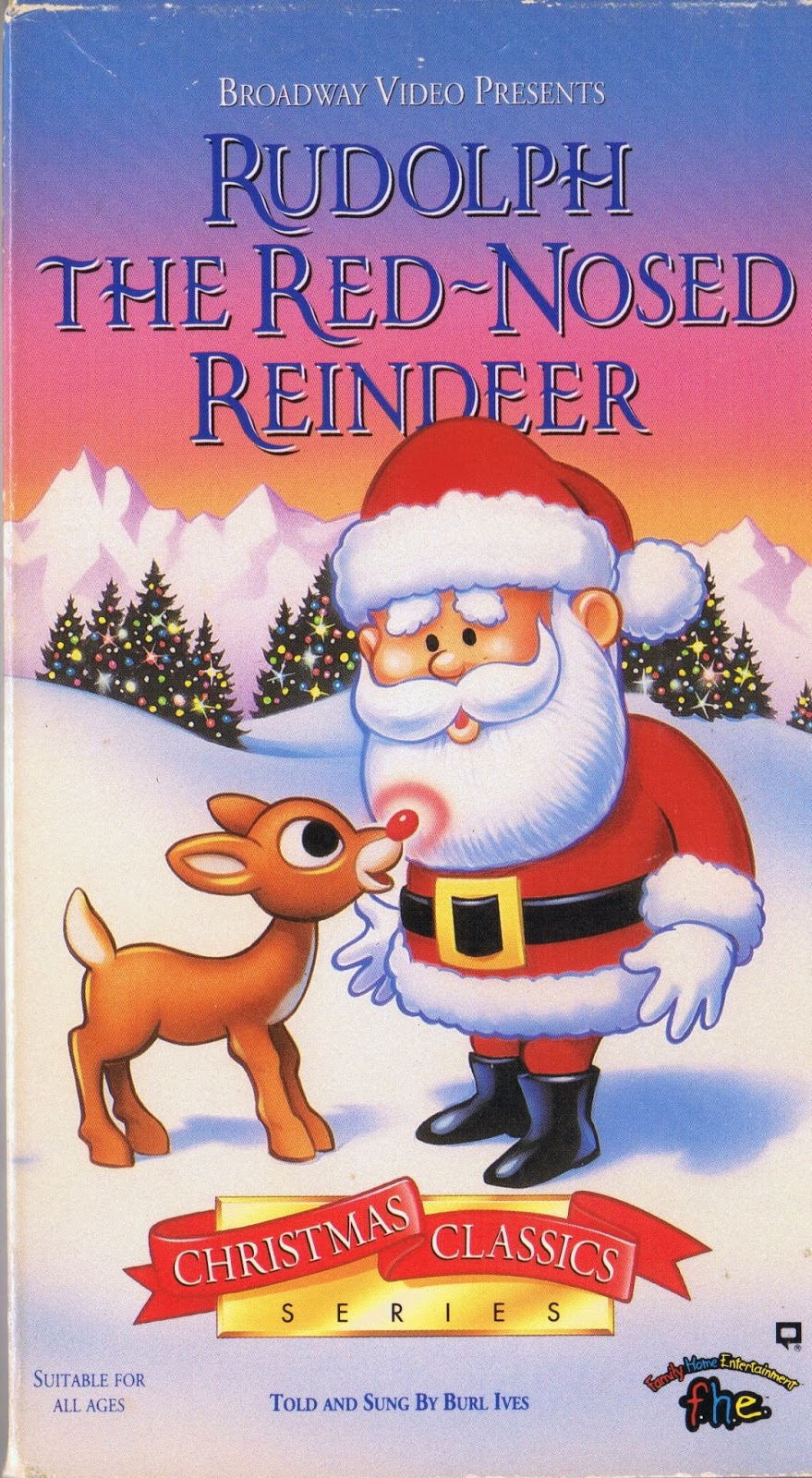
Rudolph the Red-Nosed Reindeer: A Critical Analysis

Well, the holiday season is rapidly approaching and, as it is every year, my mind is inevitably drawn into contemplation of the true spirit of Christmas – 1970s Christmas specials!

Yes, it’s true – Christmas was never more meaningful than it was during that wondrous era in which we celebrated the most important holiday of a child’s year not by going to church, not by caroling, not by hitting the mall at midnight on the day after Thanksgiving, but by plopping our butts down in front of a nineteen-inch black-and-white at 8 pm on Saturday nights in December and losing ourselves in these classic tales of childish wonder. Rudolph the Red-Nosed Reindeer, the story of an outcast who saves Christmas. Santa Claus is Coming to Town, the story of an outcast who invents Christmas as we know it today. How the Grinch Stole Christmas, the story of an outcast who… Wait, I’m starting to sense a pattern here.

Now, I am not going to confess that I still watch these specials every year, and sometimes more than once, even with no children in sight. I will decline to admit that I have all of my favorites on both video and DVD, or that the one day of the year in which even I will almost certainly tear up is when I witness The Grinch having his big change of heart. I will, however, be happy to share my thoughts on that most thought-provoking of Claymation creations – the story of Rudolph.

Yes, because there’s more to the Rudolph the Red-Nosed Reindeer than the patently obvious lesson about the worth and value of misfits. This 1964 Rankin and Bass drama is chock full of enough subtext to satisfy the most diehard of film enthusiasts, and it is still, nearly fifty years later, remarkably evocative of the socially progressive era in which it was born. Let’s look at how.

1. The authority figures are jerks. There’s the nasty coach, who, after Rudolph’s secret is revealed, informs the other children snidely: “From now on, we won’t let Rudolph play in any more reindeer games, right? Right.” Look at Rudolph’s dad, Donner, who forces him to wear a fake nose, which is not only uncomfortable, but wholly undermines Rudolph’s budding self-esteem. “You’ll like it and wear it!” he commands. “There are more important things than comfort. Self-respect!” Consider Clarice’s father, who reaffirms Rudolph’s worthlessness by rejecting Rudolph on sight: “No doe of mine is going to be seen with a… with a red-nosed reindeer!” And how about the mean elf-boss, who yells at Hermey and then (illegally) refuses to give him his break until he finishes his work?

And then there’s the big man himself, Santa Claus. Not content with merely trashing the new elf song his pint-sized slaves have spent so much time writing and rehearsing, he quickly turns his temper to the subject of Rudolph. “You should be ashamed of yourself,” he tells Donner. For what, we wonder? For siring a red-nosed son? “What a pity – he had a nice take-off, too.” In other words, Santa is so closed-minded that he can’t even consider the possibility of putting someone who’s a little different on his team, no matter how good he is or how much potential he has. It’s the attitude of guys like him that gave rise to the idea of Equal Opportunity Employment.

The message is as clear as a bright red bulb on a foggy winter night. Don’t trust anyone over 30!

2. The one authority figure who isn’t a jerk is King Moonracer, that good-looking magical lion. Although he speaks smoothly and with conviction, he is, unfortunately, an idiot. Every evening he circles the entire earth, collecting toys that no little girl or boy loves, and bringing them to his Island of Misfit Toys. Yet practically the first thing he says to Rudolph on meeting him is, “When one day you return to Christmastown, would you tell Santa about our misfit toys? I’m sure he could find children who would be happy with them.”

Okay, Your Highness, you may seem majestic with your wings and your crown and your cool castle and all, but you need better advisers. You’re telling me that you circle the entire earth every night seeking abandoned toys, but you never once thought to stop off at the North Pole and talk to Santa yourself? Heck, I mean, it’s not even that far – no farther than one can travel by ice floe, at any rate. The misfits may be all right, but the ruler of the misfits… Well, he obviously isn’t roaring with a full mane.

I’m not quite certain about the intended lesson here, though. Is it merely a dig at autocratic rule, or are we being taught that monarchy consists largely of exercises in futility? In either case, it’s none too flattering to the man in charge – and in the end, it’s the brash young upstart who actually solves the problem of the misfit toys.

3. There’s a hint of underlying feminism. When Rudolph goes missing, Donner naturally decides to go out looking for him. “Mrs. Donner wanted to go along, too,” narrator Burl Ives assures us. “No! This is man’s work!” Donner blusters in response. But the days of mindless obedience to one’s husband are passing. “No sooner did the man of the house leave than Mrs. Donner and Clarice decided to strike out on their own…” It’s also interesting that all of them – male and females alike – wind up in the cave of the Abominable Snow Monster. The buck, it seems, really was no better equipped to take care of himself than the ladies.

Notice, too, that the women aren’t jerks like the men are, perhaps because they have no actual authority. Why, that Clarice is downright sweet. She doesn’t laugh along with the others; rather, she forces Rudolph to keep his promise to walk her home. She sings to the unfortunate misfit to make him feel better. She even defends his “deformity,” declaring, “I think it’s a handsome nose! Much better than that silly false one you were wearing.” She’s kind of a forward gal, too. The way she whispers “I think you’re cute!” into Rudolph’s ear just before takeoff practice, the way she nuzzles noses with him on their first date – this is not a doe who’s suffering from sexual repression.

Strong, independent, free-thinking females – you can practically see women’s lib being born right in front of your eyes.

4. It’s about coming-of-age. Because there’s no need for Rudolph to actually get rid of his red nose. He just needs to learn to control it. Am I right? The young Rudolph’s “blinkin’ beak” goes off at random, shocking nearby observers with both the shining light and the horrible high-pitched whine that accompanies it. Indeed, his secret is discovered during one such unexpected episode – and worse, he and his friends are almost caught by The Abominable during another. But by the end, Rudolph is flicking that thing on and off on command, and that’s the point at which it becomes useful – even desirable – to Santa and the others.

“Control! Control! You must learn control!” Yoda scolds Luke Skywalker, another youngster with special powers. And what about Harry Potter? There’s a story that’s all about learning self-control. Misfit or no, Rudolph, too, must gain mastery over his body and over his emotions before he can become a productive member of society.

And that, of course, is the quintessence of growing up.

5. It’s about the increasing acceptance of babies born out of wedlock. Surprising, but quite possibly true. Have you ever noticed that Hermey has rounded ears? Strange, isn’t it? Not only is he the only elf who doesn’t like to make toys, he’s also the only one with round ears. Indeed, except for his stature and classy powder-blue attire, he might not be an elf at all. He might even be – gasp – a human!

Of course, among elves, the outcast would naturally be human; the anti-Vulcan, if you will. But why did Rankin and Bass decide not to give Hermey pointy ears? Why did they decide to make him a misfit not just by personality, but also by physical characteristic?

The answer seems obvious. Hermey is – as such children used to be called – illegitimate. Because if Santa and the Missus are the only humans in Christmastown, then where did Hermey get those rounded ears? Hmm, maybe Santa’s a jerk in more ways than we thought; taking advantage of an employee… No, wait. There’s also Yukon Cornelius. Maybe he popped into town one day and decided to pop in on some cute girl-elf’s cottage. Oh, wow. What if Hermey was in fact Yukon Cornelius’ son? Think about it – they reunite, escape death, hang out, solve problems together… I may have to compose my very first piece of fan fiction.

There’s no question that the ranks of single mothers grew in the sixties – the idea of free love was bound to have consequences, after all – and perhaps, in a time in which the term “bastard” still prevailed, Rudolph gently reminded us not to judge the child by the actions of its parents. It’s a lesson that we’ve apparently learned, because look at us today – even our most respected celebrities are having babies without ever getting married, and without having to apologize for it, either. And their children, too, are no longer scorned or held down by society because of their birth; they are quite as likely to succeed in life, perhaps to become celebrities in their own right, or even, if they’re very lucky and study hard, dentists.


Programs like Rudolph the Red-Nosed Reindeer are arguably the reason why children of my generation grew up the way we did. Consider the lessons it teaches. Question authority, particularly when authority is wrong. Make your own decisions. Judge people by their actions, not by their appearance or their circumstances. Respect those who are different from you. It’s liberal thinking in its broadest, least political sense, and it was born in an era of idealism, in which people really thought it was possible to change the world; in which they truly believed that one person could make a difference.

Rudolph lights the way.